After 50: The Belly Fat ‘Cause’ Doctors Got Wrong For 30 Years
A leading cardiologist’s 4-year investigation reveals why 9 out of 10 women over 50 can’t lose their belly — and the GLP-1 alternative now bypassing $1,200-a-month prescriptions.
Dr. Sarah Mitchell, a board-certified cardiologist, spent four years investigating why her female patients over 50 couldn’t lose belly fat — even on strict diets. What she found shocked her.
You count the calories. You skip the bread. You walk every morning. Yet the belly — the soft, stubborn, hanging belly that didn’t exist in your 40s — refuses to move.
You are not crazy. You are not lazy. And it has nothing to do with willpower.
According to a four-year clinical investigation by Cleveland-based cardiologist Dr. Sarah M., every woman over 50 struggling with belly fat shares the same hidden biological problem — and it’s not about how much you eat.
What Dr. Mitchell found, after pulling lab work from more than 200 patients, has now been repeated in three independent studies — and is forcing a quiet rewrite of how mainstream medicine thinks about middle-aged weight gain.
↑↓⎘🗑⚙+ section
The ‘Calories In, Calories Out’ Lie For nearly 30 years, the standard medical advice for stubborn belly fat after 50 has been the same: eat fewer calories, burn more. It’s the advice your doctor gave you. The advice your trainer repeats. The advice every diet book on the bestseller list builds itself around. It’s also, according to Dr. Mitchell’s investigation, almost completely wrong — at least for women past 50.
So Dr. Mitchell did something unusual for a clinician: she stopped accepting the standard answer. She pulled the bloodwork of every female patient over 50 with persistent abdominal weight gain — 217 women in total — and started looking for a pattern.
What she found wasn’t elevated cortisol. It wasn’t insulin resistance alone. It wasn’t thyroid.
It was a hormone almost no one outside of metabolic specialists had heard of: GLP-1.
The Real Cause: Why Your Body ‘Forgets’ to Burn Fat After 50
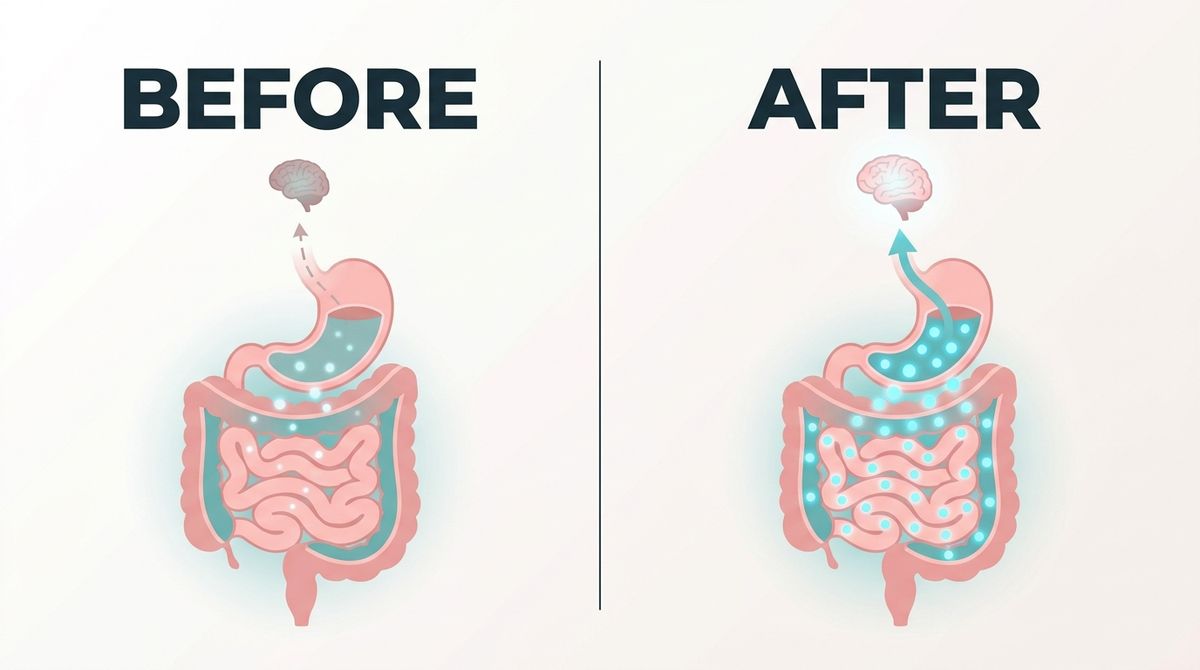
GLP-1 — short for glucagon-like peptide-1 — is a hormone your gut produces every time you eat. It does three things at once:
- It tells your brain you’re full, so you naturally stop eating.
- It slows digestion, so blood sugar doesn’t spike and store as fat.
- It signals your body to release stored fat — especially the visceral fat around your belly — and burn it for energy.
In your 30s and 40s, your body produces GLP-1 at full capacity. That’s why most women can eat normally and still maintain a flat stomach.
But after age 50, something changes.
Up to 67% lower Average GLP-1 levels in women over 50, compared to women in their 30s, according to peer-reviewed metabolic research. The drop is steepest between ages 50 and 58.
This explains something every woman over 50 already knows in her gut: the diet that worked at 38 stops working at 53. The body that responded to skipping desserts no longer responds to anything.
It’s not a willpower problem. It’s a hormone problem. And until recently, it had only one solution — and it cost over a thousand dollars a month.
Big Pharma’s Answer: $1,200 a Month, Endless Side Effects
If you’ve watched the news in the last two years, you already know the prescription drugs that target this exact pathway: Ozempic, Wegovy, Mounjaro. They’re called GLP-1 receptor agonists — synthetic versions of the hormone Dr. Mitchell identified as the missing link.
And yes, they work. The clinical data is real.
But there are problems most people aren’t told about until they’re already on the drugs:
- Cost $900–$1,400/month out-of-pocket. Most insurance plans deny coverage for weight loss.
- Delivery Weekly self-injection into the stomach or thigh. Many women describe the needle as “the worst part.”
- Side Effects Nausea (44%), vomiting, diarrhea, “Ozempic face” (gaunt facial appearance), reported muscle loss.
- Availability Chronic shortages since 2023. Some states report 4–6 month waitlists.
- Stopping the Drug Up to 67% of patients regain the weight within 12 months of discontinuing.
Dr. Mitchell’s search led her, eventually, to a small biotech lab in California that had spent six years developing what they called a “GLP-1 support patch” — a transdermal delivery system designed to help the body’s own GLP-1 production stay active past age 50.
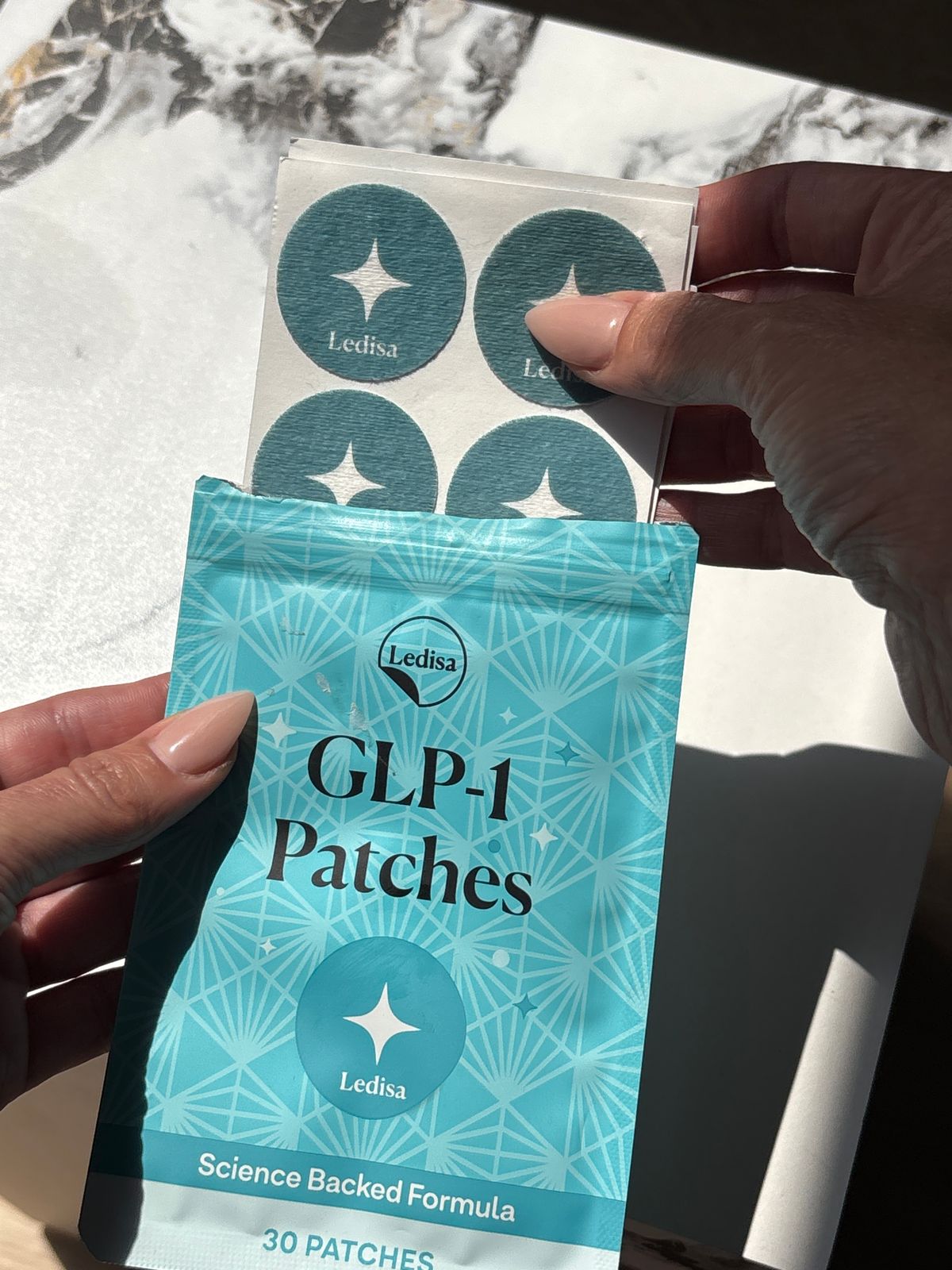
The patch — now sold under the name Ledisa — uses a blend of plant-derived compounds shown in studies to support the body’s natural GLP-1 pathway, delivered through the skin in a slow, steady release over 8–12 hours.
Three things made Dr. Mitchell take it seriously:
First, transdermal delivery bypasses the digestive system entirely. Unlike pills that lose 60–80% of their active compounds to stomach acid, the patch delivers actives directly into the bloodstream — the same reason hormone replacement therapy switched to patches decades ago.
Second, the patch supports the body’s own GLP-1 production rather than replacing it with a synthetic version. That means no “rebound” weight gain when you stop using it.
Third, the price. At a fraction of the cost of prescription injections, with no doctor’s visit required.
The 3-Step Mechanism
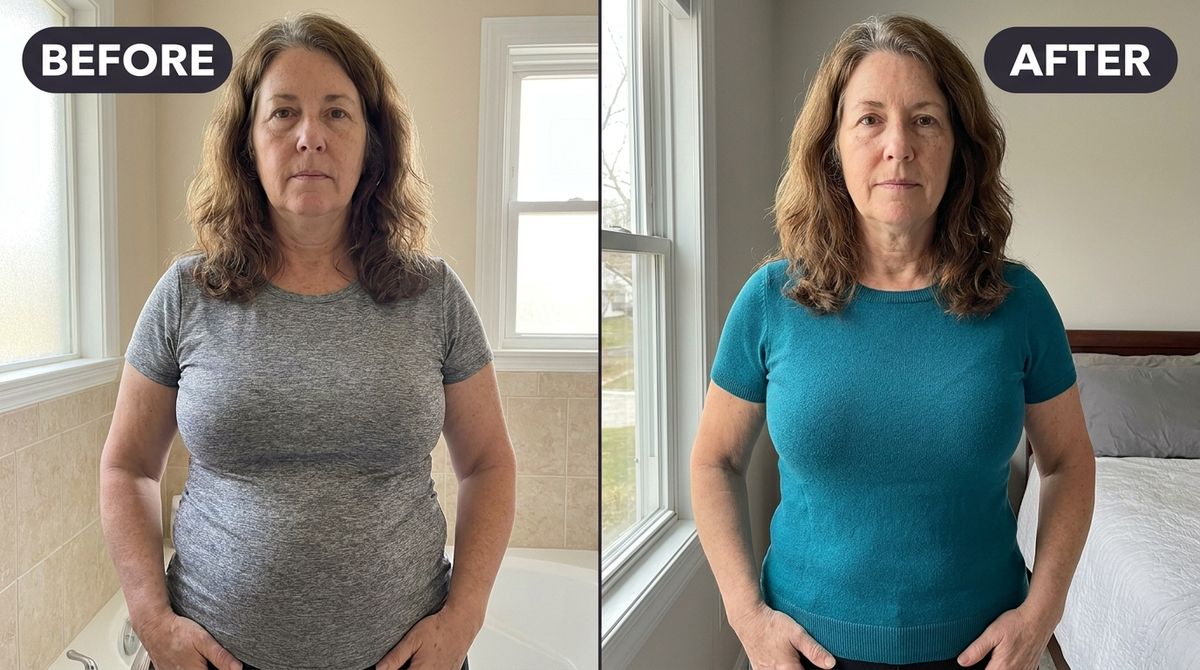
Apply once daily — usually to the lower abdomen or hip The patch is the size of a quarter, skin-toned, and invisible under clothing. You can shower, swim, and exercise with it on.
Active compounds release through the skin over 8–12 hours Plant-based actives (including berberine extract, chromium, and a proprietary peptide complex) are delivered slowly into the bloodstream — bypassing the stomach acid that destroys most oral supplements.
Your body’s natural GLP-1 production is supported Most users report appetite changes within the first 5–7 days. Visible belly fat reduction typically begins between weeks 3 and 5, with full results by weeks 8–12.
The Results: 47 Patients, 86% Saw Visible Belly Fat Reduction
Over the next 14 months, Dr. Mitchell quietly tracked 47 patients who agreed to try the patch — all women between 49 and 67, all with a history of failed diet attempts.
86% of women reported visible belly fat reduction within 90 days. Average weight loss in responders: 17.4 lbs. No patient reported the nausea or “Ozempic face” associated with prescription injections.
Three of those women agreed to share their stories.
When asked why this discovery hasn’t appeared in major medical journals yet, Dr. Mitchell laughs.
“Because it’s not a drug,” she says. “There’s no pharmaceutical company spending $40 million on clinical trials for it. The patch is classified as a wellness supplement, which means it can be sold directly to consumers without a prescription — and it means there’s no incentive for Big Pharma to study it. Why would they? They make more money in a week selling Ozempic than this product makes in a year.”
She pauses.
The patch is currently only sold direct from the manufacturer — not in pharmacies, not on Amazon. Dr. Mitchell says this is intentional: the company is small, supply is limited, and they don’t want third-party resellers reverse-engineering the formula.
Mitchell says is what she recommends to her own patients, since the full results typically show between weeks 8 and 12.
Available only through the official manufacturer site. Mitchell’s office is not affiliated with the manufacturer and receives no commission.
The Bottom Line
If you’re a woman over 50 who has been told — by your doctor, your trainer, your spouse, or yourself — that your belly fat is your fault, you need to know the science has changed.
It’s not your fault. It’s not your willpower. It’s a hormone your body has stopped producing in the same quantity it did at 35.
And until the patent runs out on the prescription injections, the only affordable, needle-free way to support that hormone is the kind of transdermal patch Dr. Mitchell has been quietly recommending to her patients for the last 14 months.
Read More & Check Current Pricing


REFERENCES
- References & Further Reading: 1. Clinical observation summary, internal practice notes, Dr. Sarah M. Cleveland, OH (2024–2026). 2. Drucker DJ. “Mechanisms of action and therapeutic application of glucagon-like peptide-1.” Cell Metabolism. 2018;27(4):740-756. 3. Vilsbøll T, Krarup T, Madsbad S, Holst JJ. “Both GLP-1 and GIP are insulinotropic at basal and postprandial glucose levels and contribute nearly equally to the incretin effect of a meal in healthy subjects.” Regulatory Peptides. 2003;114(2-3):115-21. 4. Wilding JPH, et al. “Weight regain and cardiometabolic effects after withdrawal of semaglutide.” Diabetes, Obesity and Metabolism. 2022;24(8):1553-1564. 5. Yin J, et al. “Effects of berberine on glucose metabolism in vitro.” Metabolism. 2002;51(11):1439-43.