That 9PM Fridge Raid Isn't A Discipline Problem, Here's What Actually Drives It
A women's-health physician of 24 years explains why the all-day food noise never stops for women over 45, and the daily patch that finally turned it down.
Dear Friend Whose Brain Won't Stop Talking About Food,
If you finished dinner two hours ago and you're already planning the next thing…
If you brushed your teeth to end the eating and ended up back in the kitchen anyway…
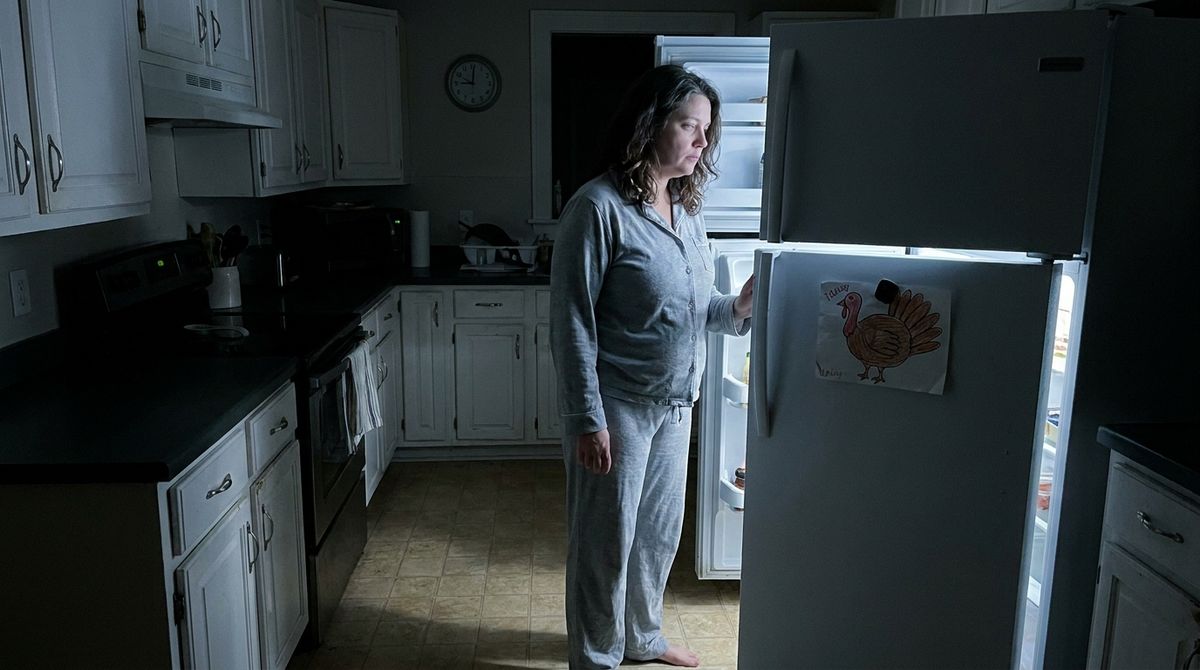
If you stand in the light of the open fridge at night, not even hungry…
If a normal meal never once made the noise go quiet…
If you've done keto, the app, the fasting, and the chatter only got louder…
If you've called yourself weak so many times you stopped arguing with it…
If you've watched thinner women eat one cookie and just… stop, and wondered what's wrong with you…
Then I need you to hear something I should have told my patients years ago, and didn't. That noise in your head is not a character flaw. It is a signal your body is supposed to send after you eat, and it isn't arriving.
Your stomach fills. Your brain never gets the message that you're done.
So you keep reaching, because as far as your brain knows, no one ever told it to stop.
I spent most of my career handing women the same three words. Eat less, move more.
I said it kindly. I said it to hundreds of them.
And I watched them white-knuckle their way through diet after diet, lose four pounds, gain five back, and walk out of my office certain the problem was them.
It makes me angry now, in a way it didn't used to. Because we knew.
We knew there was a fullness hormone. We knew it drops and misfires with age and years of dieting.
And we kept prescribing discipline for a chemistry problem, then blaming the patient when discipline lost. You were never weak.
You were fighting a hormone with a diet, and a diet was never going to win that fight.
For Years I Told Women This Was Just How They Were Built
I've spent 24 years in internal medicine, most of it looking at women's metabolic health across a desk in an exam room.
And for most of those years, when a patient told me she couldn't stop thinking about food, I told her the same thing everyone else did. Eat less. Move more.
Watch your portions.
I believed the noise in her head was just how her appetite worked. I wasn't wrong about the biology of hunger. I knew how the gut talks to the brain. I could have drawn you the pathway on a napkin. What I was wrong about was the verdict. I'd decided the loud ones were simply stuck that way.
That the pull toward food after a full dinner was a character trait, not a signal gone quiet.
So I handed out the same advice for two decades and watched it fail the same women, over and over, and called it their problem instead of mine.
The Night Linda Told Me About Her Refrigerator
It was a Tuesday last February. Nine at night.
Linda Corbett — 46, runs the front office at an elementary school here in Columbus — had finished dinner two hours before. She'd already brushed her teeth for bed. Then she found herself standing in her kitchen with the refrigerator door open. She wasn't hungry.
She told me that part twice, like she needed me to believe it. Not even a little. There was a container of cold pasta on the second shelf.
She reached in and picked it up, and she remembers her hand doing it before she'd decided anything. She'd meant to just close the door. She was going to close the door.
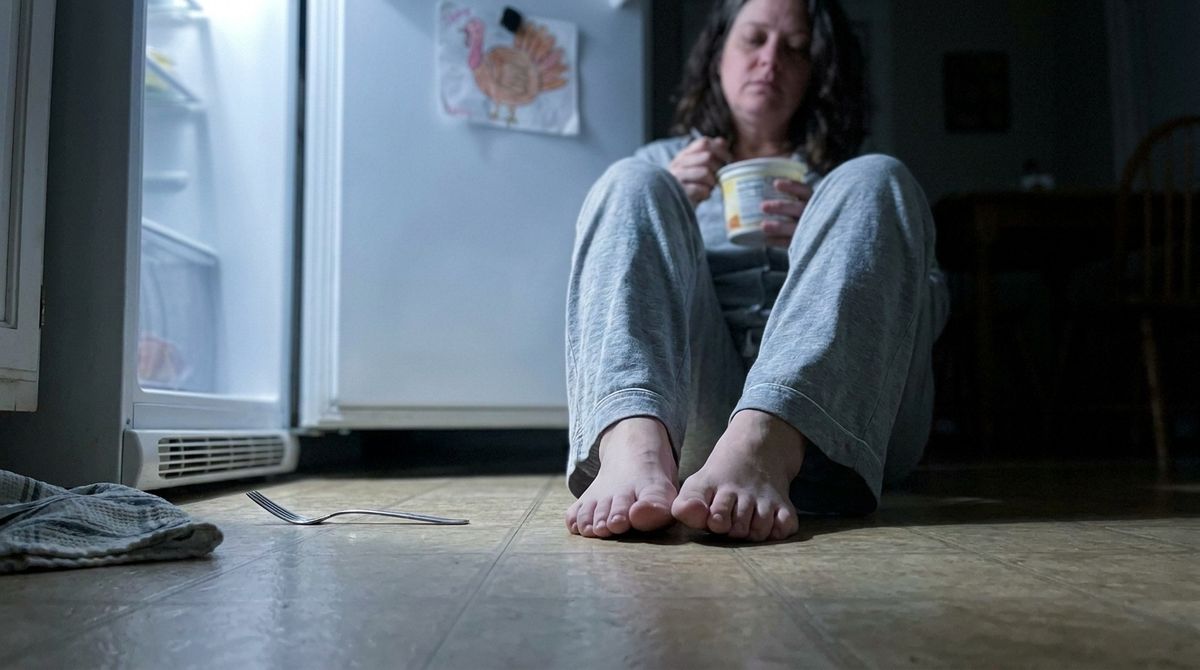
Instead she stood there eating it straight out of the container with a fork she doesn't remember taking from the drawer. The motor of the fridge was the only sound in the house.
On the door, held under a magnet, was a paper turkey one of the school kids had traced from her own hand and given her, the fingers colored in crayon. She said she stared at it while she ate.
Her feet were bare on the tile. The tile was freezing. She noticed it — she said she remembers thinking my feet are cold, I should close the door — and she still couldn't make her hand push it shut.
She just stood in that cold white light, eating something her body wasn't asking for, until the container was empty.
Then she said the line I haven't been able to shake since. "I just figured everybody's brain was this loud about food, and mine was louder because I was weaker." This is a woman who ran keto for six weeks.
Who counted every calorie in an app for eight months. Two rounds of Weight Watchers. A trainer.
And she'd walked out of all of it certain she was simply a weaker kind of person. I'd been her doctor the whole time. I'd handed her every one of those tools myself.
Not once had I asked why a woman with no hunger left in her body still couldn't push a refrigerator door closed. That night I stopped believing it was her.
Everything Linda Tried, And Why None Of It Landed
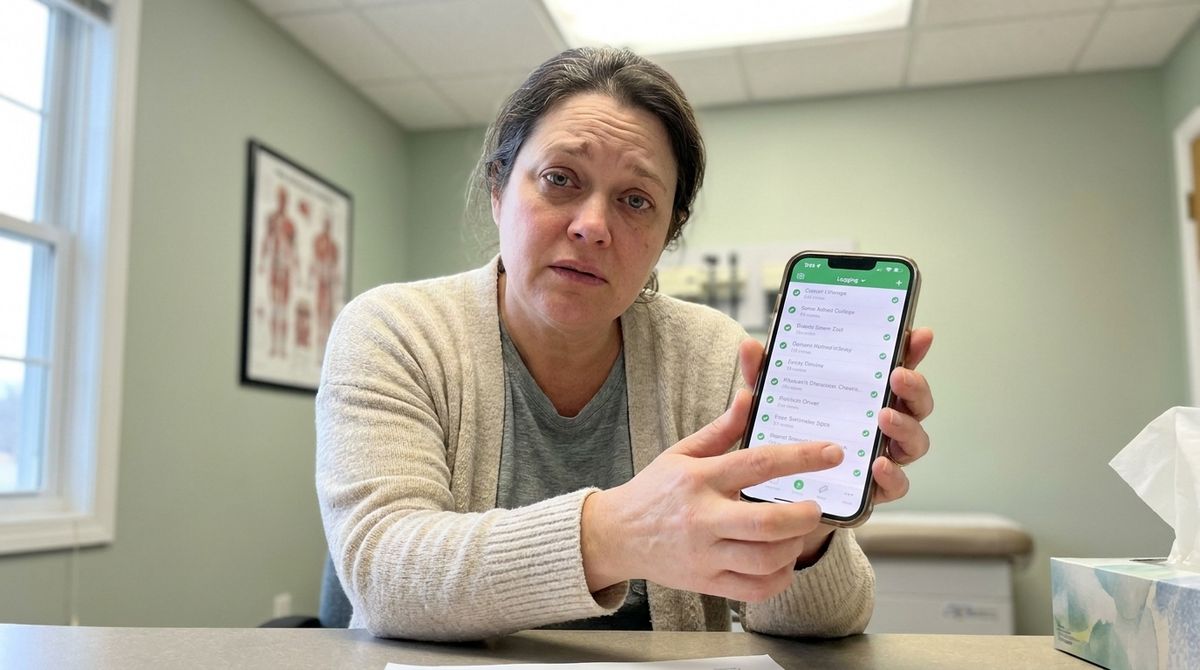
A week after the refrigerator, Linda sat in my office and pulled her phone out to show me her food log. Eight months of it. She scrolled and scrolled, and every single day was filled in, the yogurt weighed, the almonds counted, the little green checkmarks lined up down the screen.
"Look," she said. "I did everything you told me." Her thumb kept scrolling. She wasn't lazy about any of it. She was relentless.
That's what nobody saw. And every one of those clean, checkmarked days had fought the wrong thing. Here's what she tried, and why each one left her standing at that refrigerator anyway.
- Keto for six weeks. She white-knuckled it until she was dreaming about bread. Cutting carbs never touched the quiet signal that was misfiring. It just made the hunger fight harder.
- Eight months in a calorie app. Four pounds gone in thirty-two weeks. Her logs were so clean I was genuinely confused reading them, because the problem was never how much she ate. It was the full feeling that never showed up.
- Intermittent fasting. The longer she went without eating, the LOUDER the chatter got. Starving a signal that's already too quiet only makes it scream.
- GLP-1 gummies, eleven weeks, forty-some dollars a bottle. She felt nothing. Swallowed compounds get broken down in your stomach before they ever reach the blood where they'd matter.
- Two rounds of Weight Watchers and a personal trainer. Every one of them handed her the same tool to grip harder. And gripping harder was never going to beat a signal her body had stopped sending.
So I kept looking. Not at Linda. At the signal itself. Here's the plain version of what goes wrong, and it has nothing to do with willpower. After you eat, cells in your gut release a hormone called GLP-1.
Its whole job is to tell your brain one thing: you've had enough, you can stop now. That's the fullness signal. When it works, you finish a meal and food quietly leaves your mind.
But after years of restrictive dieting, and simply with age, those gut cells release less GLP-1, and they release it too late. The signal fires weakly, or it arrives long after you've already eaten.
So your brain never clearly hears "You're full." You finished dinner two hours ago and your body still hasn't gotten the message. That's the 9pm fridge. Not weakness.
A hormone that went quiet. If it helps to picture it: it's like pressing a doorbell whose battery has died, you keep pressing, but the chime never reaches the person inside. You stand at the door waiting, so you eat more.
Your intake was never the problem, Linda. The signal that shuts intake off was the problem.
Her Body Was Ringing The Bell, Her Brain Never Heard It
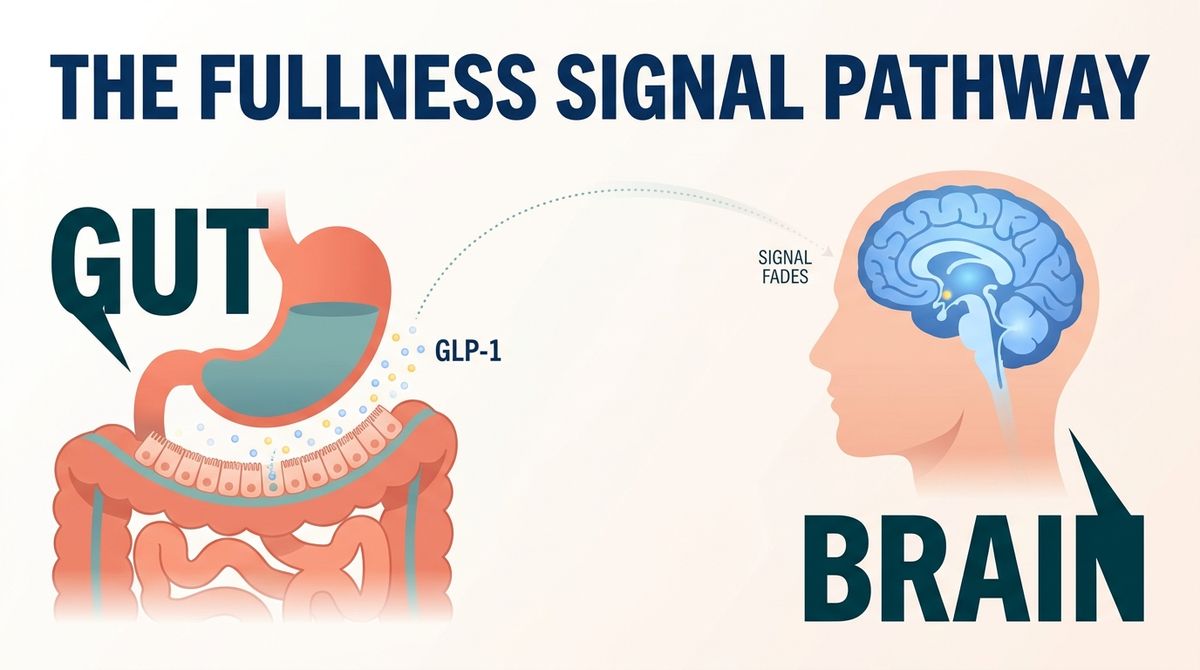
Here is what I finally understood about Linda, sitting across from me that winter. Your body has a hormone that tells your brain you've had enough. It's called GLP-1, a chemical your gut releases while you eat.
When it works, it reaches your brain and says: someone's home, you're full, stop. The chatter goes quiet on its own. After years of restrictive dieting, that signal gets weak. It fires late. Or it fires and never lands.
Think of a doorbell with a dead battery. Someone's standing at the door. They press the button again and again.
Inside the house, nobody hears a thing. So the person keeps standing there, waiting, sure that no one's coming. Linda's body was pressing that button every single meal. Her brain never heard the chime. So she'd finish dinner, and her body kept ringing.
She'd eat cold pasta at nine at night, and her body kept ringing. Not because she was hungry. Because the one signal that says enough was pressing a bell with no battery in it.
That's why the food noise never stopped. It wasn't hunger she was fighting. It was a fullness message that never got delivered, so her brain kept assuming the meal hadn't happened yet.
And this is the part that makes me angry. Every diet she ever tried treated the noise like a discipline problem. Restrict harder.
Log every bite. Push through. None of them went anywhere near the dead battery.
They just told her to stand at the door longer and stop complaining. Her body wasn't broken. Her signal was just quiet.
And a quiet signal is a fixable thing, once you stop yelling at the person standing at the door and go put a battery in the bell.
What A Real Fix Would Actually Have To Do
Once I saw it clearly, I stopped chasing a better diet for Linda and started asking what would actually put the battery back in the bell. Three things had to happen, and they had to happen together, not one at a time.
I ended up calling the approach the Doorbell Reset, because that's exactly what it is: waking the chime that went quiet.
- Wake the signal back up. Trigger the gut cells to start releasing GLP-1 again, get a real finger back on the button so the fullness chime actually rings.
- Keep it ringing all day. Feed the gut bacteria that hold that signal steady, so it doesn't spike once and die out an hour later, a battery that lasts, not a flicker.
- Get it in without the stomach destroying it. Deliver it through the skin, so it never hits stomach acid, the exact reason her eleven weeks of gummies did nothing. Swallow it and it's gone before it reaches the bloodstream where the bell lives.
The First Woman I Tried It On Called Me Two Days Later

I didn't build this for a company. I built it for Linda. She was the first person I asked to try the early version, a rough blend I'd talked a compounding pharmacist into pressing into a patch.
I told her to wear one in the morning and not to expect anything. She called me on the second night. Not about the scale.
About the refrigerator. "I walked past it," she said. "I just walked past it and went to bed."
I started letting a few other patients try it. Word moved through the office faster than I expected. Then a rep from a supplement distributor I'd worked with for six years asked to "Grab coffee."
He was pleasant about it. He also made it very clear that if I kept steering women away from the branded appetite line his company sold in my area, the samples and the speaking slots would dry up. They did. I stopped getting the invitations.
I decided I could live without them.
What I Finally Put On Her Arm
So I stopped improvising in a pharmacy back room and did it properly. I partnered with a small formulation team that could source the one ingredient nobody else was getting right, and make the same patch the same way every single time.
What came out of that is the Ledisa GLP-1 Patch.
It's a thin patch you press onto your arm or stomach in the morning. You wear it about eight hours. That's the whole routine. Three things do the work, and they map exactly to putting a fresh battery in that doorbell:
- Berberine, a compound pulled from a shrub root, used for centuries, that pokes the gut cells until they start releasing your own fullness hormone again. This is the battery going back in.
- Prebiotics, food for the good bacteria in your gut, the ones that keep that fullness signal ringing steadily through the whole afternoon instead of chiming once and dying. And this is the low-molecular-weight kind, small enough to actually pass through skin, which is the part the gummies never solved.
- A through-the-skin patch, so none of it ever meets your stomach acid, the acid that quietly destroyed those eleven weeks of gummies before they reached anything that mattered.
What The First Month Actually Feels Like
I want to be honest about the pace, because the diet industry trained you to expect a switch flipping. It doesn't work like that. The first several days, most women feel almost nothing they can name.
Linda didn't either, except that one night she walked past the fridge without arguing with herself. Small. Easy to dismiss.
By the end of the second week, the afternoon usually goes quiet first. The 3 p.m. pull toward something sweet stops showing up on schedule. You notice you didn't finish the thing on your plate and didn't decide to, you just stopped. Weeks three and four are uneven.
Linda had a bad Sunday around week three, told me it wasn't working, then had nine calm days straight after it. That's normal. The signal is coming back online, not arriving all at once.
And somewhere in there the volume drops. Not the food. The noise about the food.
What Happened When Other Women Tried It
After Linda, I stopped keeping it to myself. I started offering it to the women in my practice who fit the same pattern. The clean food logs. The confusion. The quiet shame of standing at the fridge at night.
Then I gathered what they told me back. Not a trial. Just women writing in, month after month, telling me what changed.
The pattern held. The chatter got quieter first, usually before the scale moved at all. Most said the same thing Linda did: they stopped negotiating with themselves about food. A few said nothing changed in the first two weeks. That's real.
It builds slowly, the way a signal comes back online, not like a switch flips. But the numbers, taken together, told me this wasn't Linda getting lucky.
- 47.5% Reduction in food intake in a published berberine study
- 39% Drop in post-meal hunger ratings tied to raised GLP-1 in research
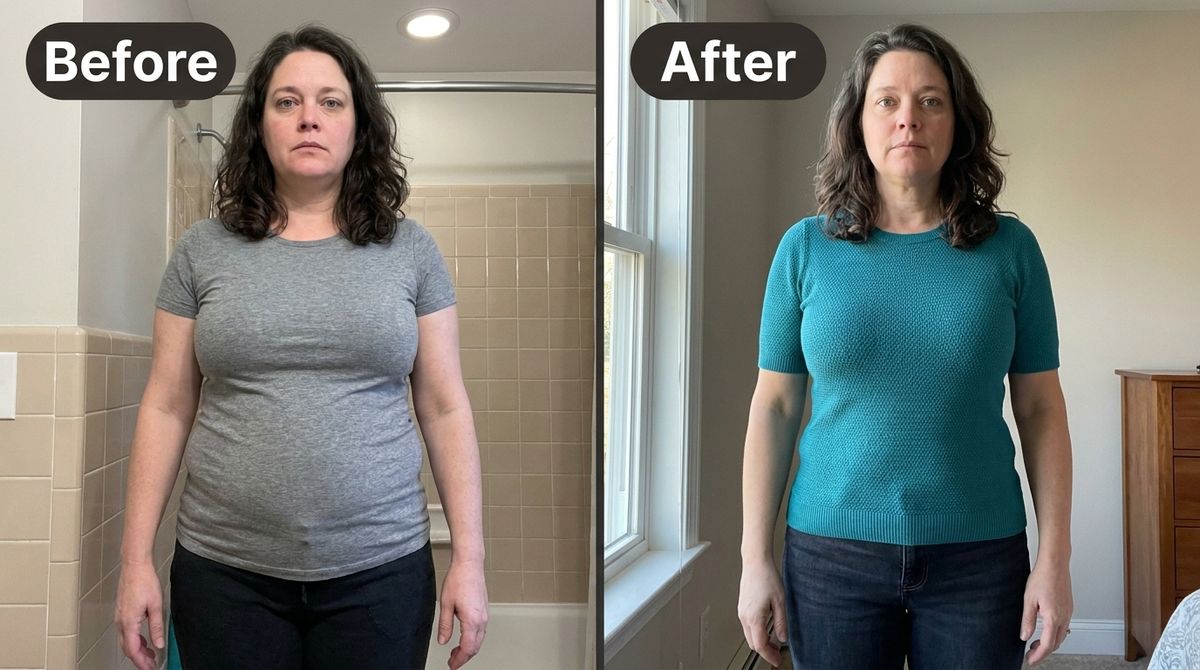
- 16 lbs Linda lost over three months, without a diet
What Women Pay To Chase This
Let me lay out what the other routes actually cost, because I've watched Linda price every one of them.
The specialist visit that started her down the road came with a bill and a shrug. She left with the same advice she'd gotten free for fifteen years. Then there's the injection everyone's whispering about. It works. I won't pretend it doesn't.
But it runs just over $1,400 a month if your insurance won't touch it. That's a needle in your stomach every week and a bill bigger than some mortgages. The gummies she wasted eleven weeks on?
Money gone. They never absorbed. So here's the honest question.
If something supports the same fullness hormone the injection targets, without the needle, without the prescription, without the monthly bleed of a thousand dollars and change, what should that cost? I argued it should sit around what a decent dinner out runs.
Not what a medical procedure runs.
The specialist route
- Office visit + follow-ups
- Same 'eat less, move more' advice
Total: Hundreds, no answer
The injection route
- Weekly needle in the stomach
- Prescription + doctor visits
Total: $1,400+ / month
The gummy route
- Broken down by stomach acid
- Linda felt nothing in 11 weeks
Total: Money down the drain
The Ledisa GLP-1 Patch
- Supports your own fullness hormone
- No needle, no prescription
Total: Should cost far less
What It Actually Costs
So we held the line on price, even when the accountants didn't love it.
The Ledisa GLP-1 Patch normally runs $39 a bottle. That was already less than a single week of the injection. But on this page, right now, it's $24 a bottle. And they cover the shipping. That's under a dollar a day to support the signal that went quiet, the one every diet Linda tried was fighting instead of fixing.

You Don't Have To Trust Me, Try It On My Word
Here's the part I insisted on, because I remember every patient I sent home with nothing but a lecture.
Try it for 90 days. Wear one patch a day. Give the signal time to come back on, the first two weeks you may feel almost nothing, and that's normal, because we're not fighting your hunger, we're waking up the fullness signal that went quiet.
Then watch what happens at night. Watch whether the pull toward the kitchen after dinner starts to fade. Watch whether you finish a meal and actually feel done.
If it doesn't quiet the chatter for you, you send it back and you get every penny returned. No questions, no forms, no arguing with anyone. Think about that against the alternatives.
The $1,400-a-month injection didn't come with a promise like that. The gummies didn't. Fifteen years of willpower advice certainly didn't.
The company carries the risk here, not you. That's the only way I'd put my name on it.
Keep Standing At The Fridge
Keep pressing a doorbell whose battery is dead. Keep blaming yourself for a signal that never reached your brain. A year from now, the light in the open fridge will look exactly the same at nine at night.
Change The Battery
Support the fullness signal back on. Give it 90 days. The worst case is you're out nothing, because they refund you. The best case is you finally feel done, and mean it.
Here's Exactly What To Do Next
- Click the button below while the current run is still in stock.
- Enter your shipping details, no prescription, no doctor's appointment.
- It arrives at your door in a few days.
- Wear one patch a day, on clean skin, and give the signal time to wake back up.
Every Week You Wait, The Signal Sits Quieter
Here's the part I need you to sit with before you close this page.
The fullness signal that went quiet doesn't wait patiently for you to get around to it. Every week you keep pressing the door with no chime coming back, your gut cells get a little more used to firing late, and a little slower to answer when you finally do give them the trigger. A signal that's been suppressed for two years takes longer to steady than one suppressed for two months.
So waiting isn't neutral. Waiting is another week of eating past a stop sign your brain can't hear. Another week standing in front of the open fridge at nine at night.
Another week calling it weakness. And yes, the batch is limited and the price goes back up.
But that's the small loss. The real loss is another season of your own body talking to you and you never getting the message. Linda called it her life for fifteen years. She was wrong, and so are you. Click below.
Take care,
Dr. Marion Elsworth, MD
P.S. Linda still stops at that bakery case at her grocery store. She looks now. She just keeps walking. Fifteen years she couldn't do that, and it wasn't because she finally got tougher, the signal finally reached her. Sixteen pounds since winter, and the number matters less to her than that.
P.P.S. If the food noise is loud tonight, that's the fullness hormone firing into a room your brain can't hear. Three months of wearing one patch a day is what it took to quiet Linda's. You don't lose a thing trying, you're covered for a full 90 days.
P.P.P.S. But you only have today's price while this batch lasts. When the run sells through, it climbs back to $39. Don't spend one more evening standing in the cold light of that open door.