Top Cardiologist: The 3-Second Bedtime Ritual That Melts Belly Fat After 40 - No Diet, No Exercise, No Needles
A leading cardiologist's 3-year investigation reveals why the body "forgets" to burn fat overnight after 40 - and the simple habit women are now doing before bed instead of paying $1,200 a month for the weekly injections.

Dr. Sarah Mitchell, a board-certified cardiologist, spent three years trying to answer a question her textbooks couldn't: why her patients over 40 couldn't lose belly fat, even while eating clean and exercising.
What she found in their overnight hormone patterns changed how she treats every patient over 40.
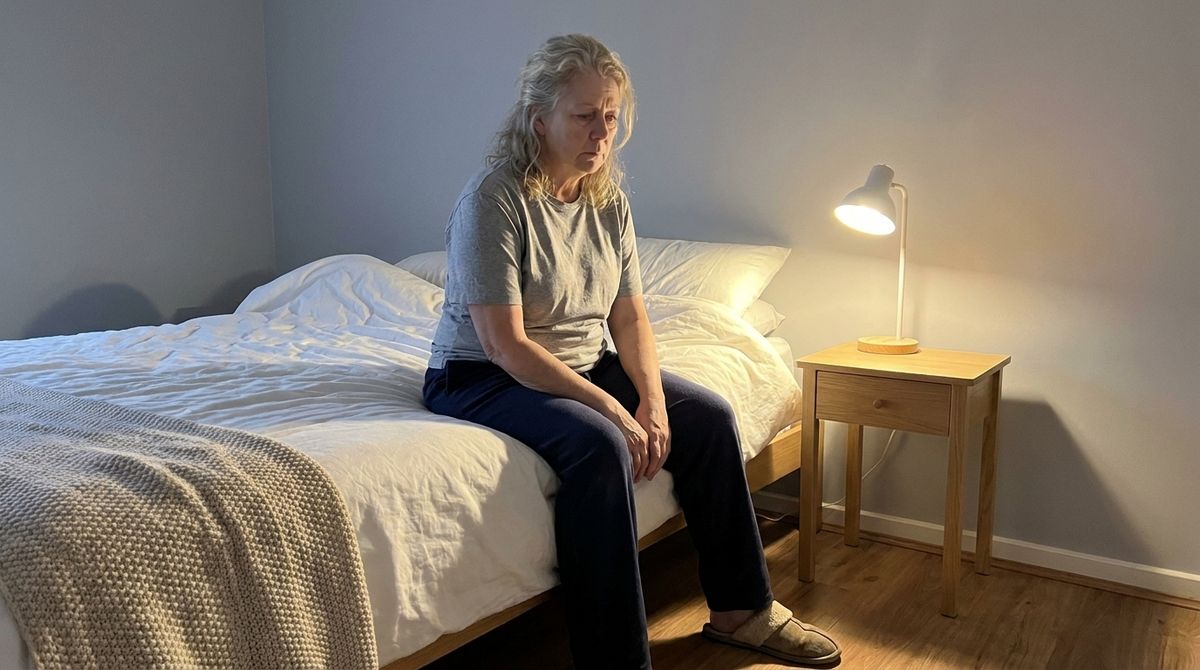
You wake up, look in the mirror, and see it.The soft, hanging belly that wasn't there in your 30s. You eat clean. You walk in the morning. You skip dessert most nights.
And still, it won't budge. Here's what Dr. Mitchell wants you to hear first: you are not doing anything wrong. You are not lazy.
And it has almost nothing to do with what you eat during the day.
Because according to her three-year investigation, every patient over 40 struggling with stubborn belly fat shared one hidden problem - and it was happening between 10 p.m. and 6 a.m., while they were sound asleep.
After pulling overnight metabolic panels on more than 180 of her own patients, she found a pattern that has since shown up in independent metabolic research - and it's quietly changing how doctors think about middle-aged weight gain.
THE "EAT LESS, SWEAT MORE" LIE
For decades, the advice for stubborn belly fat has been the same: cut calories, burn more. It's what your doctor tells you.What your trainer repeats. What every diet book on the shelf is built around. It's also, according to Dr. Mitchell, almost completely wrong for anyone over 40.
So she did something unusual for a clinician: she stopped accepting the standard answer.
She pulled overnight panels on 183 patients with stubborn belly weight and looked for what they had in common.
It wasn't cortisol alone. It wasn't insulin resistance alone. It wasn't thyroid.
It was a hormone most people outside metabolic medicine have never heard of: GLP-1. And the steepest drop was happening between midnight and 4 a.m. - the exact window when the body is supposed to be running on stored fat.
THE REAL CAUSE: WHY THE BODY 'FORGETS' TO BURN FAT OVERNIGHT AFTER 40.
GLP-1 (short for glucagon-like peptide-1) is a hormone your gut releases in a slow, steady drip - including through the night.
Think of it as the body's "you're fed, you can relax" signal. When it's working, three things happen:
- It quiets appetite and cravings, so you're not raiding the pantry at 10 p.m.
- It keeps blood sugar steady, so less gets shuttled into fat storage.
- It tells the body it's safe to tap into stored energy overnight instead of clinging to it.
In your 20s and 30s, your body puts out GLP-1 at full strength all night long.
That's why so many people can eat normally and still wake up flat.
But somewhere after 40, that overnight signal starts to fade.
This is the thing everyone over 40 already feels in their gut: the diet that worked at 32 stops working at 43.
It's not a willpower problem. It's a hormone problem - and it hits hardest while you sleep.
Until recently, there was only one real way to fix it.
THE $1,200-A-MONTH ANSWER - AND THE NEEDLE THAT COMES WITH IT
If you've watched the news the last two years, you already know the prescription shots that target this exact hormone. I won't name them here. They're the lab-made version of the same hormone Dr. Mitchell identified. They work - the clinical data is real.
But there's a side to them most patients don't hear about until they're already on them:
- Cost: $900–$1,400 a month out of pocket. Most insurance won't cover weight loss.
- The needle: a weekly self-injection into the stomach or thigh. Most patients call it the worst part.
- Side effects: nausea, digestive misery, and the gaunt, hollowed-out "shot face" people notice in the mirror.
- Supply: chronic shortages and long waitlists since 2023.
- Stopping: a large share of patients regain the weight within a year of quitting.
THE DISCOVERY: A PATCH YOU WEAR WHILE YOU SLEEP

Dr. Mitchell's search led her to a small biotech lab in California that had spent six years on a different idea entirely.
Instead of injecting a lab-made hormone, what if you could help the body keep its own overnight GLP-1 activity switched on past 40?
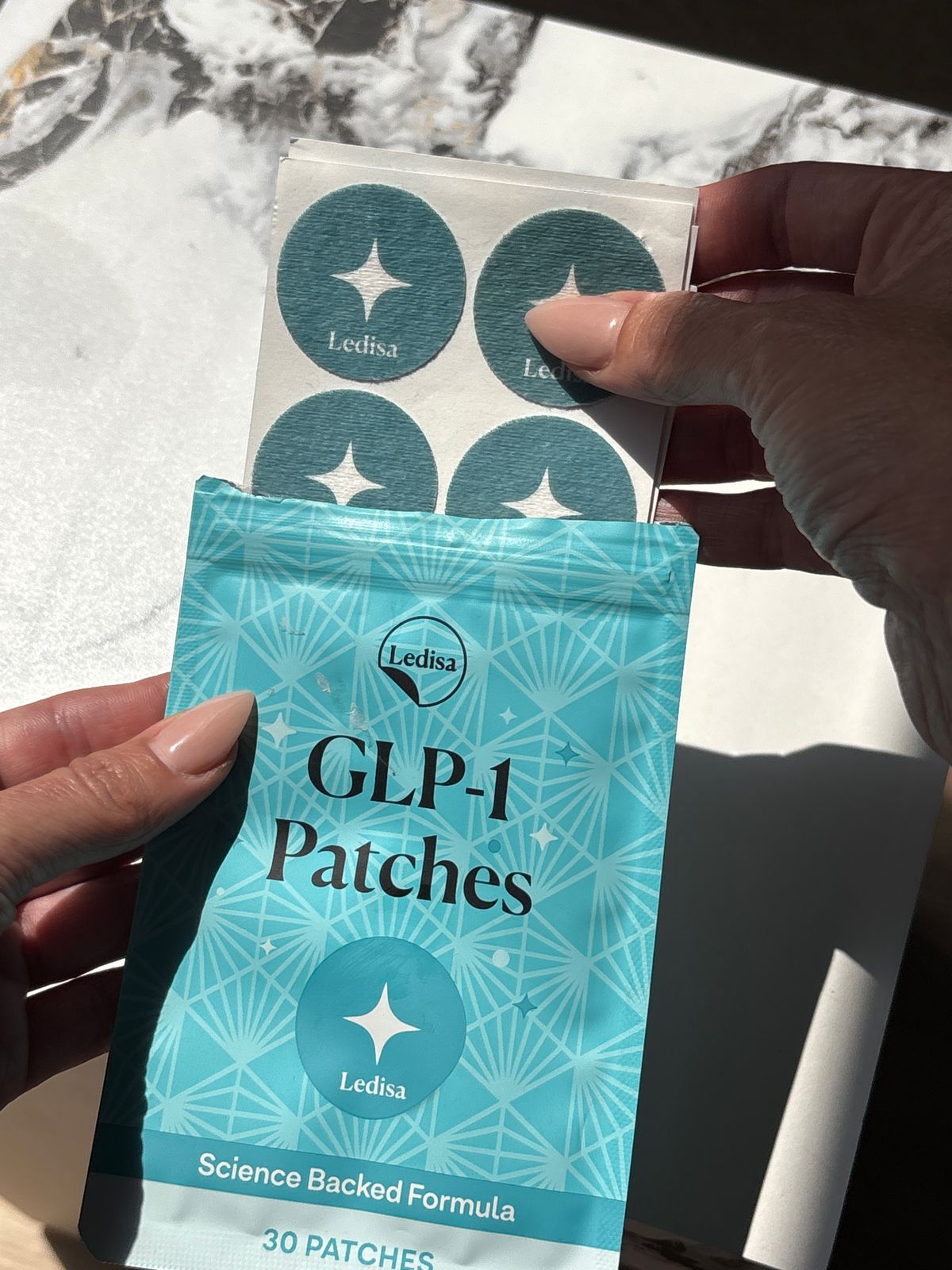
Their answer was a transdermal patch - now sold under the name Ledisa - built around a blend of botanical actives (berberine, a low-molecular-weight prebiotic complex, chromium, apple cider vinegar extract, and alpha-lipoic acid) chosen because they're studied for supporting the body's own GLP-1 activity.
It releases slowly through the skin over about 8 hours.Three things made her take it seriously. First, it goes through the skin, not the stomach.
Oral supplements lose much of their active ingredients to stomach acid before they ever reach the bloodstream - which is the same reason hormone therapy moved to patches decades ago.
The prebiotic complex Ledisa uses is small enough to actually pass through the skin, which most competitors' aren't. Second, the 8-hour release matches a night's sleep. Nothing to remember, nothing to swallow, nothing to time around meals.
Put it on before bed, take it off in the morning. Third - and this is what sealed it for her - those actives are working during the exact overnight window when the body's own GLP-1 activity has been fading. It's not adding a hormone.
It's supporting the signal the body used to send on its own.
THE BEDTIME HABIT, START TO FINISH

There's honestly not much to it - which is the point. You apply one patch before bed.
It's quarter-sized, skin-toned, and invisible under pajamas; most women put it on the lower belly or hip. Then you sleep.
Over the next 8 hours the actives release slowly into the bloodstream during deep sleep - no stomach acid, no digestive breakdown, no interference with dinner or your morning coffee.
In the morning, you peel it off and toss it.
Most women notice the appetite change first - the late-night pull toward the fridge just isn't there the way it was. That tends to show up in the first week or so.
The change in the mirror comes later, usually over the following couple of months.
Dr. Mitchell's instruction to every patient is the same: "Don't change anything else. Don't start a new diet. Don't join a gym.Just put the patch on before bed and let your body do the work it used to do on its own."
WHAT HAPPENED WITH HER PATIENTS
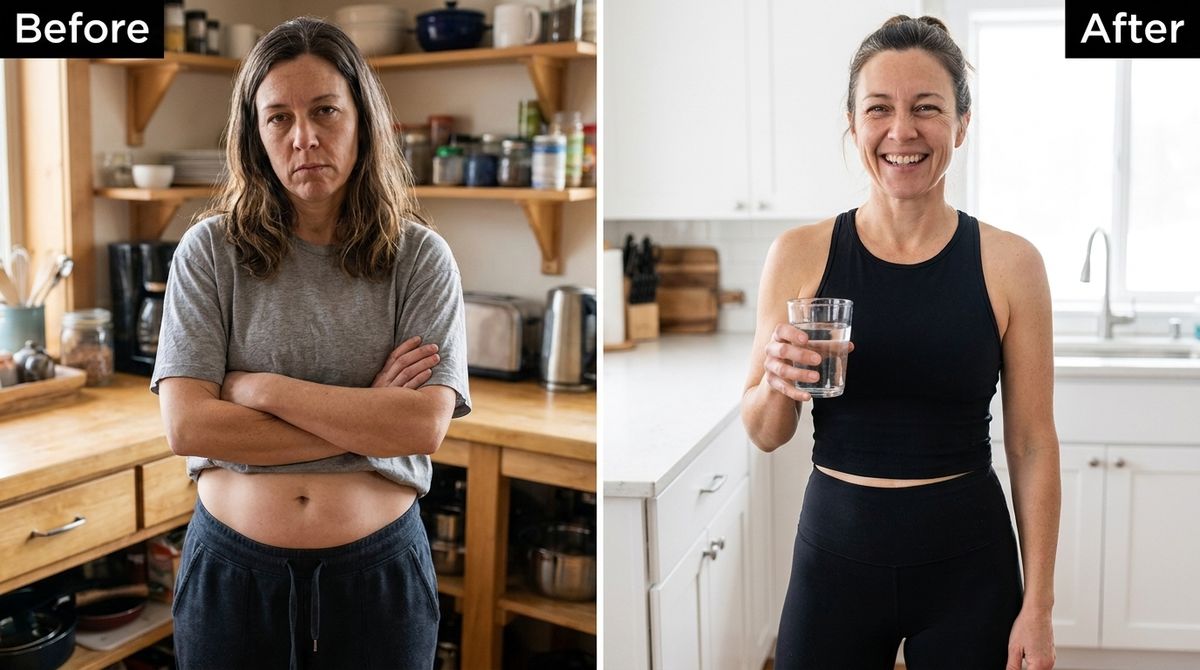
Over the next 11 months, Dr. Mitchell tracked 42 patients who agreed to try the overnight patch - all between 41 and 68, all with a history of diets that stopped working.
The pattern was hard to ignore.
The overwhelming majority reported their appetite calming down within the first couple of weeks, and visibly less belly by the three-month mark.
Not one reported the nausea or hollow "shot face" that comes with the injections.
Three of them agreed to share their stories.
When I asked Dr. Mitchell why this hasn't shown up in the big medical journals, she laughed. "Because it's not a drug," she said. "There's no company spending $40 million on trials for it. It's a wellness supplement - it can be sold directly to the public without a prescription, and that means there's no incentive for anyone big to study it. If every woman over 40 knew she could support her own overnight fat-burning window with a patch she puts on before bed, a lot of expensive prescriptions would go unfilled. That's why you're reading about it here and not on the evening news."
HOW TO TRY IT
The patch is sold directly by the maker - not in pharmacies, not on Amazon. The company is small, supply is limited, and they'd rather not have resellers reverse-engineering the formula.
Right now they're running a promotion for new customers.
A single month is $31 (50% off), and the maker knocks the price down further on the 3-month supply - which is what Dr. Mitchell recommends to her own patients, since the visible change usually shows up over the first two to three months.
And here's the part that makes it easy to try: a 90-day money-back guarantee.
Wear it every night for three months.
If your cravings don't quiet down, if the belly doesn't move, if you're not happy for any reason at all - you send it back and get every dollar refunded.
Even the patches you already used. That's the maker betting on itself, not you betting on them.

THE BOTTOM LINE
If you're over 40 and somebody - your doctor, your trainer, your spouse, or the voice in your own head - has told you the belly is your fault, here's what the science now says: it isn't.
It's not your willpower. It's a hormone your body stopped making the way it did at 32, and it's fading hardest during the overnight hours when your belly was supposed to be shrinking.
You've been fighting a night-shift problem with daytime tools. No wonder it felt impossible.
And until the patents run out on the injections, the simplest, needle-free way to support that overnight window is the patch Dr. Mitchell has quietly been recommending to her own patients for the last 11 months.