Why The Belly Won't Budge After 50, And What Finally Moved It
A board-certified doctor explains why counting calories and the gym stopped working, and the daily patch that finally quieted the midnight eating, no needles or prescriptions.

Dear Friend With A Belly That Won't Budge,
If you eat a full dinner and stand at the counter an hour later still hungry…
If you count every calorie all day and the scale doesn't move by Friday…
If you find yourself at the fridge at two in the morning, again…
If you walk every single day and the belly only grew…
If your jeans stopped buttoning even though you're eating less than at 40…
If the app, the keto, the gummies all did nothing…
If your doctor said 'it's just menopause' and left it there…
If you've quietly decided this is just who you are now… Then what I'm about to tell you could change everything you believe about why this keeps happening. Because here is what nobody sat you down and explained.
The hunger that won't quit after 50 is not a sign you're weak. It's not proof your metabolism broke.
It is one specific thing going wrong, in one specific place in your body, and it has a name.
I've spent twenty-six years in women's metabolic health. For most of those years, I handed women the same tired advice everyone else did.
Eat less. Move more.
I watched them do everything right and still lose the fight. And I was angry, not at them.
At how long we let the real reason stay buried, while we told good women to just try harder. You are not lazy. Your body simply stopped sending the one signal that tells your brain you've had enough. I'm going to show you exactly what that signal is, why it goes quiet as we get older, and what finally brought it back for my own sister, the woman who taught me to swim, who I watched shrink into her own kitchen.
Stay with me. Every word of this matters.
For Years I Told Women There Was Nothing To Be Done
I've spent 26 years in internal medicine, most of it sitting across from women trying to understand why their own bodies had turned on them.
Board-certified. Plenty of letters after my name. And for most of those years, I gave the same answer everyone else gave. I'd look at a woman who'd done everything right, whose weight kept climbing anyway, and I'd tell her it was her age.
Her metabolism. The change of life. I told her to eat less and move more, and I believed I was being kind. Here is what I got wrong. I never doubted the biology. I knew perfectly well that appetite is run by hormones, not virtue.
What I doubted was whether anything could be done about it. I had decided it was permanent. A one-way door you walked through around 50, and after that you just managed the disappointment. I was wrong about the door. Not about the hormone.
About whether it could ever swing back open.
The Morning I Found My Sister At The Counter
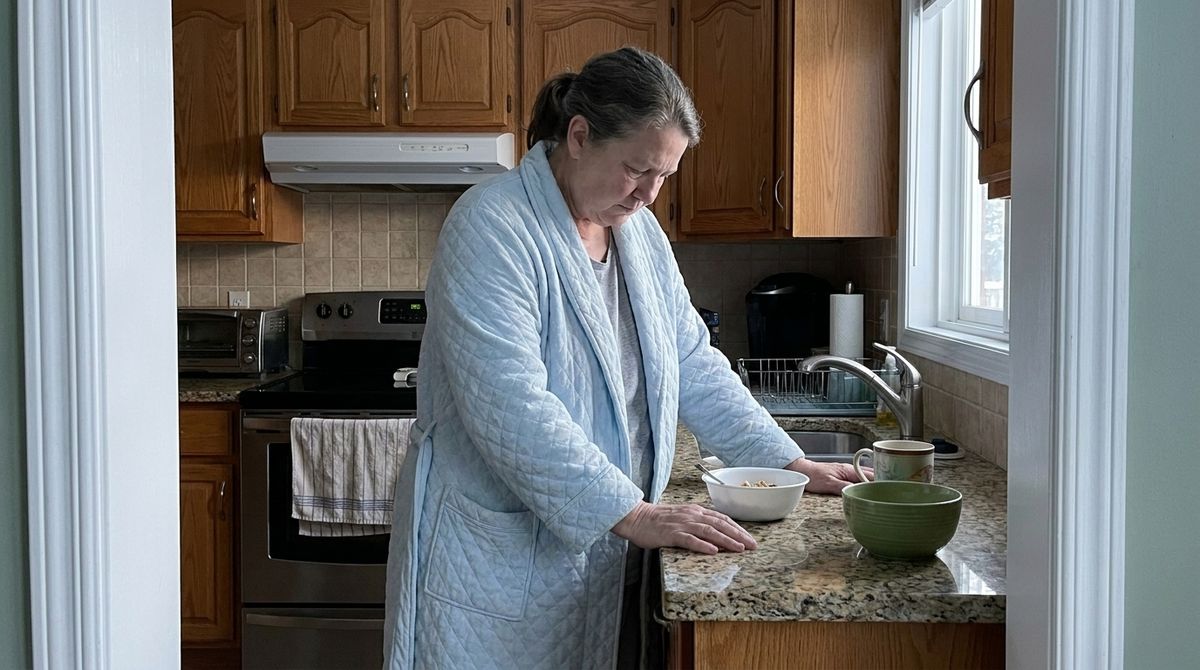
One Sunday last October I let myself into Carol's kitchen a little before seven in the morning. Carol is my older sister. She taught me to swim. She's the one I called every Sunday for forty years.
Fifty-nine now, retired from the middle-school library in Tampa, and for the last two years I'd watched her go quiet on me in a way I couldn't name. She didn't hear the door. She was standing at the counter in her robe, both hands flat on the granite. Staring down at a cereal bowl. It was empty.
She'd already eaten what was in it, and she'd filled it again, and now she was looking at the second bowl like it belonged to someone else. She said it quietly, to the bowl, not to me. "I already ate dinner. I ate a whole dinner three hours ago." The green ceramic bowl she kept on the counter for her grandkids was empty too. She always kept clementines in it.
They were gone. She'd eaten them standing up at two in the morning again, the way she had most nights that year. There was a coffee mug beside the sink gone cold, a thin skin formed over the top of it.
She never once picked it up the whole time I stood there. I didn't say anything smart. I'm a doctor and I stood in my sister's kitchen with nothing.
She finally turned around. She gave me this tired little shrug, the kind you give when you've stopped arguing with something. "This is just what I am now, Maggie," she said.
"I stopped fighting it." That was the morning it stopped being medicine to me. She wasn't a chart.
She was the woman who'd held me up in the deep end when I was six, and she'd decided she was a lost cause in her own kitchen. I drove home and I could not let it sit.
Everything Carol Tried Before That Sunday
Carol is not a lazy woman. She spent eleven years chasing this the way you probably have. I know because she showed me the drawer. A whole bathroom drawer, rattling with half-used bottles, when she finally let me look.
Here is what she'd done, and why not one of it moved the belly.
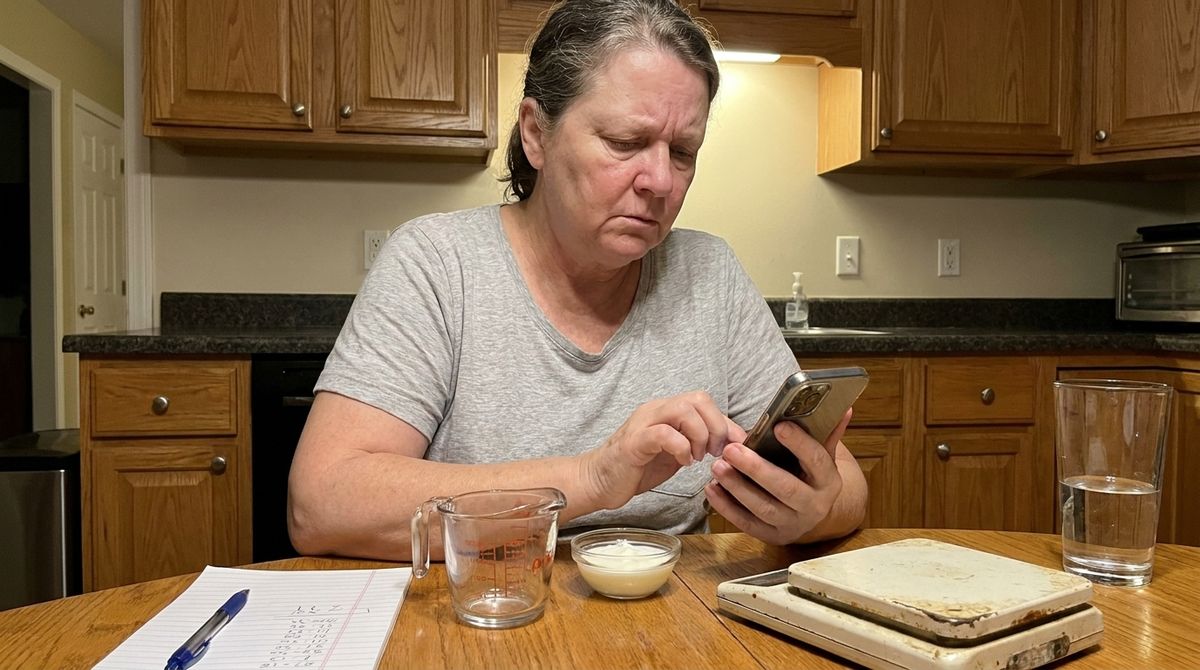
- Counting every calorie on an app for eleven months straight. She logged the yogurt, the almonds, the splash of milk in her coffee. It fought the number on the plate, but an hour later she was hungry all over again, because the message telling her brain she'd eaten never fired.
- Walking three miles every morning, plus two years of a gym membership she barely broke even on. Exercise burns off some of what you eat. It does nothing for the missing fullness signal. So the midnight cravings out-ran every mile she ever walked.
- Keto, then intermittent fasting, then the drawer full of 'natural' diet pills and gummies. Anything you swallow gets dumped into stomach acid first, and that acid breaks down the delicate ingredients before they ever reach the gut cells that release the hormone. She was paying good money to digest, not to change anything.
- Asking her doctor. He told her it was 'just menopause,' to eat less and move more, and sent her home. He named her age. He never named the mechanism. So she went home and blamed herself instead of the biology.
The Real Reason None Of It Worked
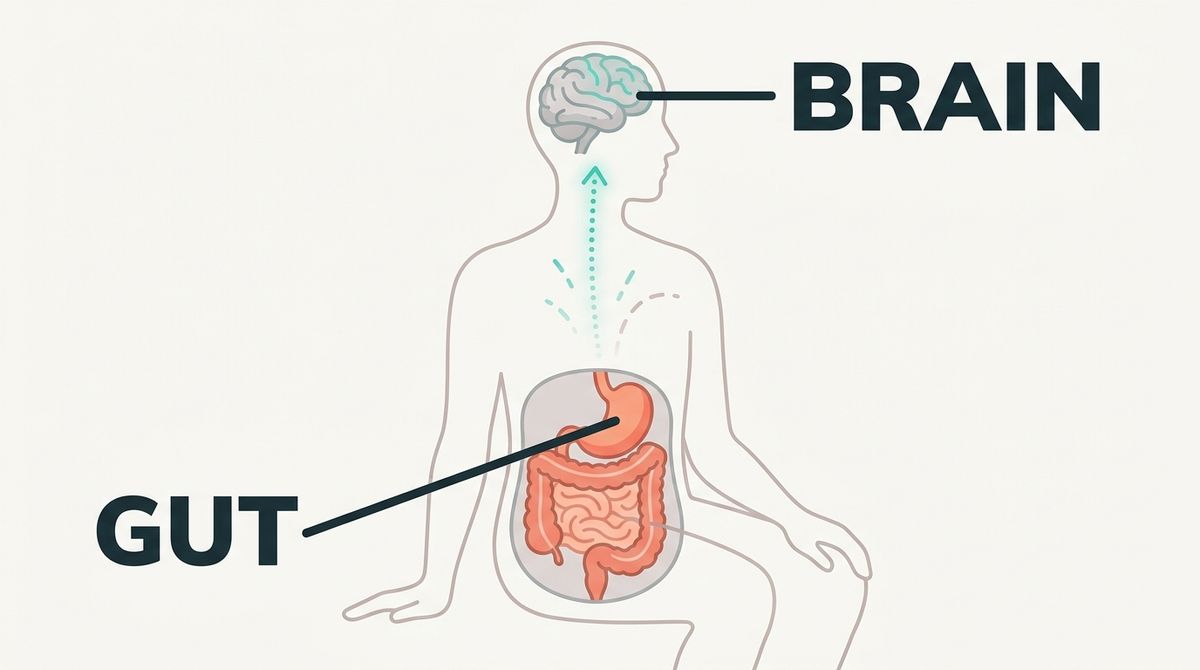
So I went looking. Not for a new diet. For the one thing every single one of those failures had in common. And here it is, as plainly as I can say it. Carol wasn't overeating because she lacked something. She was overeating because her body had stopped sending the one signal that tells the brain to stop. That signal has a name. It's a hormone your gut makes called GLP-1.
When you've eaten enough, your gut releases it, and it travels up and tells your brain, plainly: you've had enough, you can stop now. Here's the part nobody had told her. That hormone quietly drops as you age.
About a third of it is gone by 45. More than half by your mid-50s. Think of a doorbell with a dead battery.
Someone's at the door, that's the food you already ate. They press the button. But the chime never sounds inside the house.
So your brain keeps acting like nobody's home, and you keep answering a door that's already been answered. GLP-1 is the battery. When it runs low, the 'I'm full' chime never reaches the brain. That is why the calorie app failed.
That is why the walking failed. Every one of those things attacked the food on the plate, the person standing at the door. Not one of them touched the dead battery.
And it explains the cruelest part. The harder Carol tried, the hungrier she felt, and the more she hated herself for it. She was fighting a chime that was never going to ring.
So why had no one told her? Because the fix everyone reaches for, the injections, cost $800 to $1,200 a month, need a prescription, and a needle. That's the version that made the headlines.
Almost nobody was talking about the quiet biology underneath it. The signal itself. And the fact that your own body already knows how to make it, it just needs the right nudge to start again.
The Hormone Nobody Named For Her
Here is what nobody at Carol's checkups ever said out loud. There is a hormone your gut makes called GLP-1.
Its whole job is to tell your brain one thing: you've eaten enough, you can stop now. When you were younger, your gut made plenty of it. You ate, the signal fired, and you pushed back from the table without a fight.
You didn't think about it. It just happened. But that hormone quietly drops as you age. About a third of it is gone by 45, and more than half by your mid-50s. So the food goes in.
But the message that says "that's plenty" never arrives. Think of the doorbell on your front door. Somebody's standing on the porch, that's the food you just ate, telling your body it's satisfied.
They press the button. But the battery inside is dead. The chime never sounds anywhere in the house.
So you sit in your living room, and as far as your brain can tell, nobody's there. Nobody rang. You're still waiting for a signal that will never come. GLP-1 is that battery.
When it runs low, the "I'm full" chime never reaches the brain, so your brain keeps you reaching for more, hours after you've truly had enough. That is why Carol stood at her counter at two in the morning eating clementines she wasn't hungry for. Her stomach was full.
Her brain simply never got the message. She wasn't weak, and she wasn't lying to herself about being hungry. Her body had stopped sending the one signal that used to shut the whole thing off.
And here's the part that made me angry as a doctor: for years I told women her age it was menopause and to eat less. I named the season of life. I never named the hormone.
So they blamed themselves for a battery that had simply gone flat.
What It Actually Takes To Turn The Signal Back On
Once I understood that, the fix got simple to describe. If you want your brain to hear "enough" again, you can't just eat less. You have to get that dead battery working, and that takes three things happening at once.
I came to think of it as the Full-Signal Method. Three moves, all aimed at the same doorbell:
- Wake the cells back up. Berberine, a plant compound, signals the cells in your gut lining to start releasing GLP-1 again, the way they did when you were younger. That's putting a fresh battery in the doorbell.
- Keep the chime ringing all day. Prebiotics feed the good bacteria in your gut that sustain that release for hours, so it's a steady hum, not one quick buzz that fades in twenty minutes.
- Get it in without your stomach wrecking it. Deliver both through the skin, slowly and steadily, because anything you swallow lands in stomach acid that breaks down roughly 85% of it before it ever reaches those gut cells.
The Complaint That Landed On My Desk
I tried the first patches on Carol before anyone else. Three weeks in, she called me on a Tuesday night, not to report a number on the scale, but to tell me she'd walked past the green bowl of clementines at midnight and just... gone back to bed.
Then a woman in my own practice, Diane R., a retired court reporter, wore one for a month and told her endocrinologist the late-night eating had simply stopped. Her endocrinologist didn't ask what she was using. He wrote in her chart that she was "non-compliant with dietary counseling" and suggested she was likely under-reporting what she ate.
A colleague I'd known for years pulled me aside at a conference and told me, plainly, that I was "confusing patients" by telling them their weight was a hormone problem and not a discipline one. The advice they'd built careers on was eat less, move more. A patch that quieted the eating without a lecture wasn't a breakthrough to them.
It was an accusation.
What I Finally Put On Carol's Arm
So I stopped waiting for the field to catch up and built the thing myself.
I partnered with a small formulation team and spent the better part of a year getting two things to pass through skin, steadily, for hours, without the stomach ever touching them.
What we ended up with is a once-a-day patch called Ledisa. It is not a diet pill. It is not another thing to swallow and lose to your stomach acid. It's the doorbell battery, delivered the one way that actually reaches the door.
Here is what's inside it, and nothing else matters as much as these two:
- Berberine, a plant compound, the yellow one they've pulled from goldenseal and barberry root for centuries. It taps the gut cells that release the fullness hormone and gets them firing again, the way they fired when Carol was forty.
- Prebiotics, food for the good bacteria living in your gut. They keep those cells releasing the signal steadily across the whole day, instead of one quick pulse that fades by lunch.
The First Weeks Are Quieter Than You'd Think
I want to be honest about how this actually goes, because it is not a switch you flip. Carol felt nothing the first several days. She told me she was sure it wasn't working, and I told her to keep wearing it, one patch on the arm each morning, about eight hours, then off. Somewhere in the second week the doorbell started ringing again. Not dramatically.
She just noticed she'd finished dinner and, for once, didn't drift back to the kitchen an hour later. Week three was the clementines.
The midnight standing-at-the-counter eating was the first thing to ease, same as three out of four women in a group we followed later said happened for them. The scale moved after that, slowly, unevenly. Some weeks nothing.
Then a pound. I'm not going to promise you a number by Friday. What came back first wasn't the number.
It was the quiet.
What The Numbers Looked Like After A Few Months
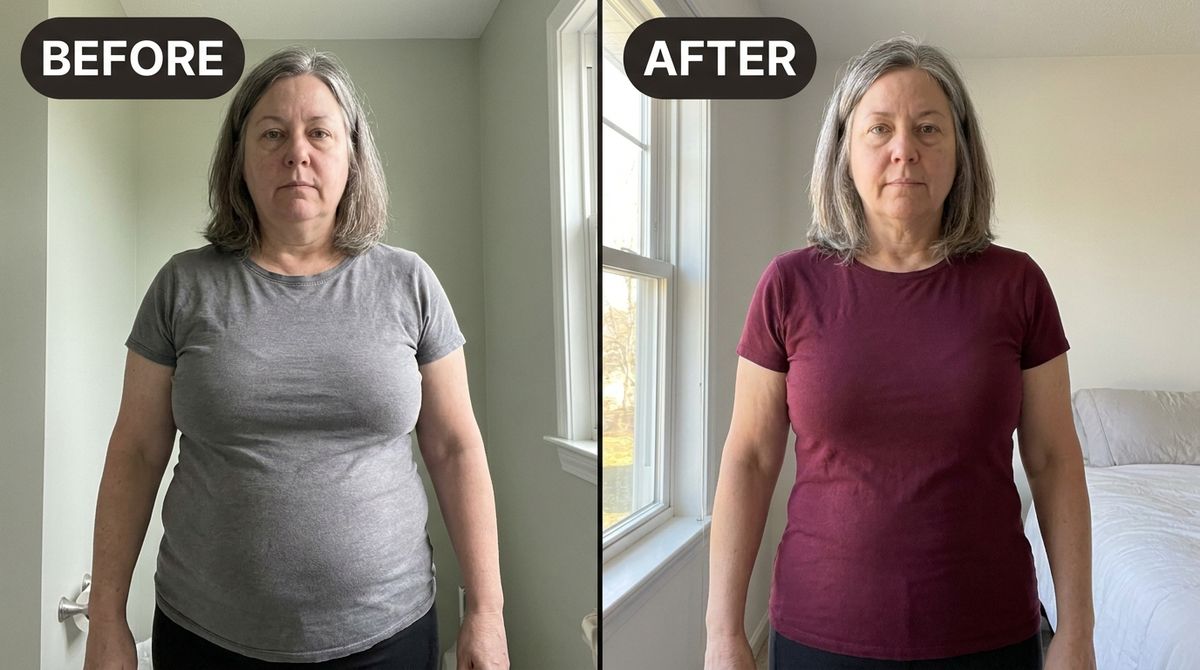
I'm not going to hand you a miracle chart. Carol's weight came off unevenly. Some weeks the scale sat still and she got frustrated all over again. But the pattern held.
And once I started recommending the patch to more of my patients, I kept a rough tally of what they told me, not a study, just what women reported back at their follow-ups. The late-night eating was almost always the first thing to go. Before the scale moved, before the clothes changed, the midnight trips to the counter just quietly stopped.
That matched Carol exactly. The green bowl of clementines started lasting a full week again.
- 3 of 4 women in a group we followed said the late-night snacking eased first
- ~8 hrs of steady support from a single patch, worn once a day
- under $1 a day, versus $800 to $1,200 a month for the injections
What Every Other Answer Actually Costs
Let me lay out what a woman like Carol was told to spend to fix this. Another round with a weight-loss specialist runs a few hundred dollars for the visit, and you walk out with the same advice she'd already heard.
The injections her daughter takes? $800 to $1,200 a month. A needle in the stomach every week. Nausea half the time. And the reports that the weight piles back on within months of stopping.
The cabinet full of gummies and diet pills, thirty, forty dollars a bottle, over and over, that never made it past her stomach acid to do a thing.
When you add up the years of programs, the memberships, the failed bottles, most women I know have spent thousands chasing this. So when I set out to make something that actually supports the hormone that dropped, I asked what it should honestly cost.
Something you use every day, that reaches the gut cells the pills never could. Under a dollar a day felt right.
Weight-loss specialist
- A few hundred per visit
- Same 'eat less, move more' advice
Total: Hundreds, no real answer
GLP-1 injections
- $800–$1,200 a month
- Needles, nausea, rebound weight
Total: $800–$1,200 / month
Diet pills & gummies
- $30–$40 a bottle, endlessly
- Broken down before they work
Total: Thousands over the years
The Ledisa patch
- Supports your own GLP-1
- One patch, worn ~8 hours a day
Total: Under $1 a day
What It Costs On This Page
Under a dollar a day to support the hormone that quietly walked out on you after 50, instead of a thousand dollars a month for a needle.

You Try It, Not Me
I'll be plain about the guarantee, because I know exactly what Carol was thinking when she first heard about this.
She'd wasted so much money on things that did nothing that spending another dime on hope felt almost embarrassing. So here's how this works. You wear one patch a day for 90 days. If the late-night trips to the counter don't ease.
If nothing about your appetite feels different. If you look back and think it was just another sticker, you email us and you get every penny back. Opened boxes.
Half-used boxes. It doesn't matter. The risk is mine, not yours.
I'd rather eat the cost of a return than have one more woman blame herself for a signal her body stopped sending. The injections her daughter takes don't come with that.
Neither did any of the pills Carol tried. You get three full months to find out on your own body.
You can keep waiting
Keep counting the calories. Keep walking the miles. Keep standing at the counter at two in the morning telling yourself this is just what you are now, while the signal that stopped firing keeps you hungry.
Or you can support the signal
Or you spend under a dollar a day to wake the gut cells back up, and give your brain the chance to hear 'you've had enough' again, for the first time in years.
Here's Exactly What Happens Next
- Tap the button below while the tested stock is still at $29.
- Enter your shipping details on the next page, no prescription, no doctor visit, nothing to schedule.
- It arrives at your door in a few days.
- Peel one patch, stick it on your stomach or arm in the morning, and go about your day. Do that daily, and let your body do the rest.
Every Morning You Wait Costs You Something
So here's what I need you to understand before you close this page. This isn't a sale that runs out. It's a signal that keeps fading. Every month you wait, more of those gut cells go quiet.
The L-cells that release the fullness signal don't sit there patiently. The longer they've gone silent, the harder they are to wake back up. The woman who starts today wakes them after months of quiet.
The woman who waits a year is coaxing back cells that have been asleep far longer. Both can come back. One comes back easier.
And every night you wait is another night standing at the counter at two in the morning, eating something you already ate, wondering what's wrong with you. Nothing is wrong with you. The battery is low.
That's fixable. Yes, the price goes back up when this small run sells through. That matters less than the mornings you don't get back. Carol waited four years. Don't wait like she did. Click below.
Take care of yourself,
Dr. Margaret Ellison, MD
P.S. The green bowl on Carol's counter has clementines in it again. Her grandkids grab them after school. She hasn't touched it at two in the morning in months, because the chime finally reached her. That's the only proof I ever really cared about.
P.P.S. If you're the one who's already tried everything and decided this is just what you are now, that's exactly who I wrote this for. You weren't the problem. Nobody ever fixed the signal.
P.P.P.S. When this batch is gone, the next one is weeks out and back at the regular price. If the button below still works, the discounted run is still there. Go now.