Why The Cravings Only Hit After Dinner Once You're Past 50
A gastroenterologist of 26 years explains why sensible days fall apart at night, and the one thing that finally quieted it, without diets or pills.
Dear Friend Who Snacks At Night,
If you eat sensibly all day, then lose it after dinner…
If the cravings come on the second the kitchen goes quiet…
If you finish a real dinner and your brain still says "more"…
If you stand at the open pantry at ten p.m. and can't stop…
If you've eaten crackers over the sink so the floor stays clean…
If you've told yourself tomorrow will be different, and it never is…
If you tried the bedtime tea and the early lights-out, and the pull came right back…
If you've decided this is just who you are now, at 61, after a lifetime of being the careful one… Then what I'm about to tell you could change how you see every single one of those nights. Because here is what nobody told you, and what made me furious once I understood it.
Those nights are not a character flaw. They are not the evening you happen to be weak.
They are not boredom, or loneliness, or a habit you let slip. There is a real, physical reason the cravings only come after dinner once you're past 50. A signal in your body that used to ring loud and clear at the end of a meal has gone almost silent by evening.
And for years, women like you were handed the same useless advice, eat less, try harder, want it more, as if the answer were somewhere inside your own resolve.
It was never in there to find. I'm a gastroenterologist.
I've spent 26 years looking at exactly the part of the body where this goes wrong.
And I spent most of those years repeating the same advice everyone else does, until it broke down in my own family's kitchen, in front of my own eyes, in a person I'd looked up to my whole life.
Let me tell you what I saw.
What I Told Women For Years, And Got Wrong
I've spent 26 years looking at guts for a living. Endoscopies, biopsies, the whole map of how the body decides it's had enough to eat.
I know the hormone that runs that decision better than I know my own street. So here is the part that's hard to admit. For most of those years, when a woman over 50 sat in my office and told me she couldn't stop snacking at night, I believed the same thing her doctor believed. That her cravings were a habit. That she'd loosened up with age.
That the fix was discipline she'd have to dig up on her own. I didn't get the biology wrong. I knew GLP-1 drops as we age.
What I got wrong was what that meant for her. I told women, gently, that this was just part of getting older. That they'd have to manage it.
I handed them a shrug in a white coat. I was wrong about that last part. Not the science.
The surrender.
The Night I Found My Sister At The Pantry
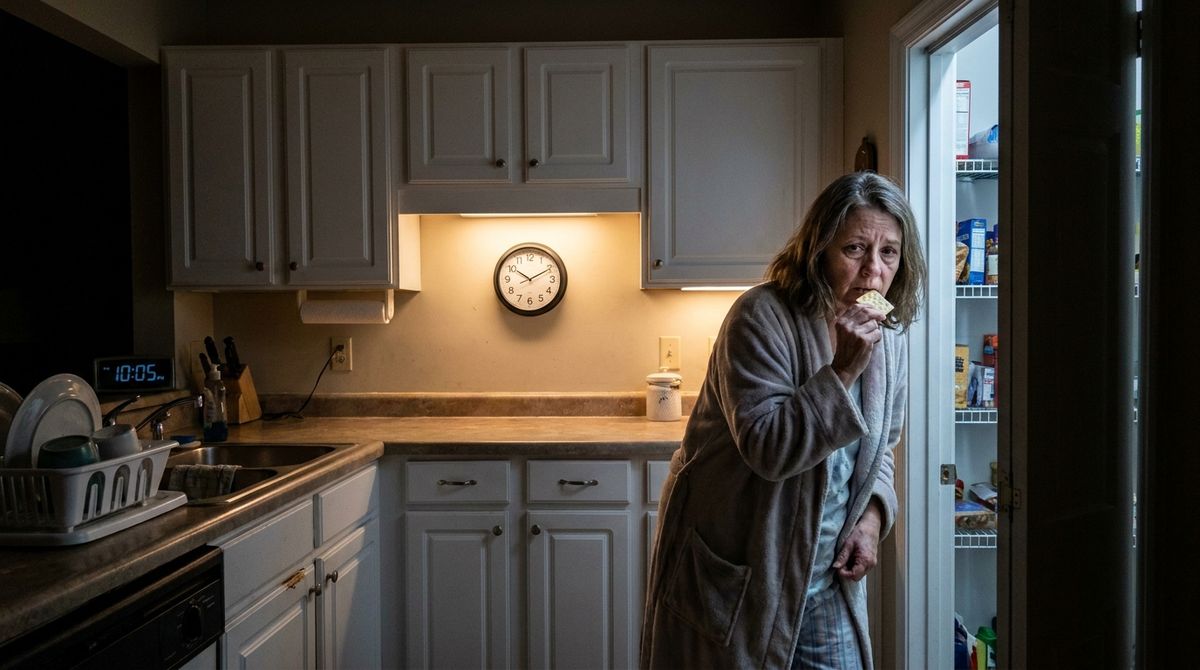
It was a Thursday last October, a little after ten at night. I let myself into Carol's kitchen with the spare key to drop off a casserole dish she'd lent me. Carol is my older sister. Sixty-one, retired from the school office, the steady one.
The one who never broke a rule in her life. Growing up, she was the one I copied. She didn't hear me come in.
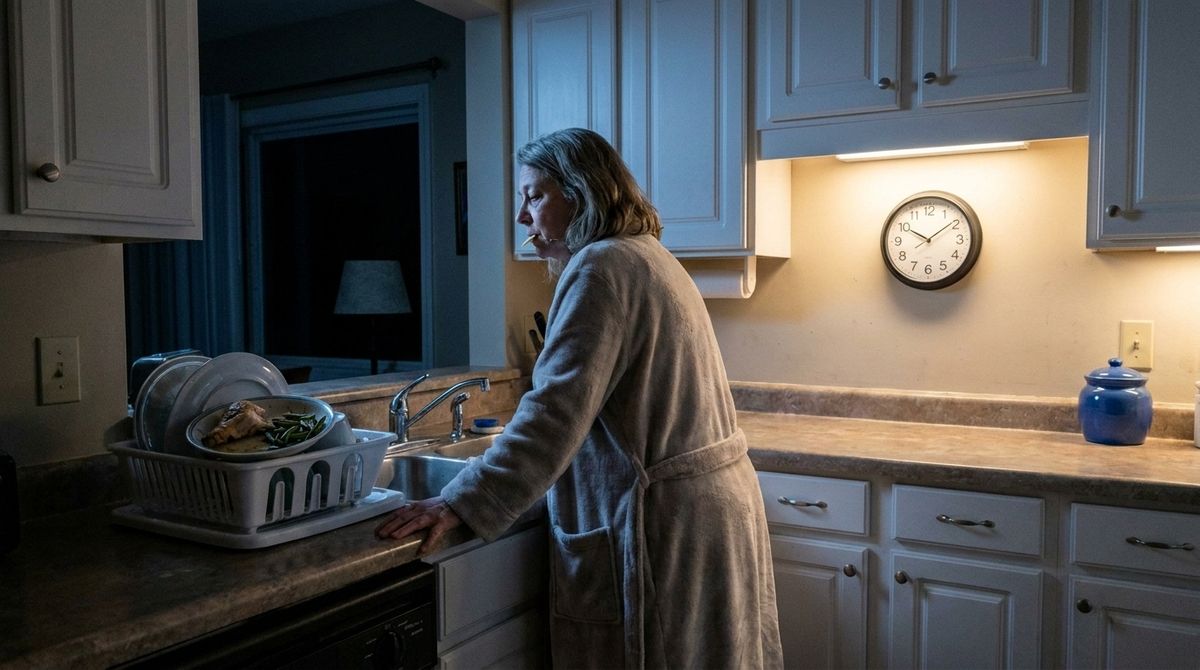
She was standing at the open pantry in her robe, eating saltines straight from the sleeve over the sink. Fast. The way you eat when you're trying to finish before you catch yourself doing it.
Two feet away, in the drying rack, sat the bowl from her dinner. Chicken and green beans, half eaten. Sensible.
Rinsed and put up hours ago. I stood there in the doorway and watched my sister, the careful one, push crackers into her mouth like she was racing the clock. There was a single crumb stuck to her bottom lip.
She started talking when she realized I was there, but she didn't brush it away, and she didn't fully turn around to face me. She kept her back half to me, talking to the window over the sink. The kitchen clock ticked.
Neither of us said anything about the saltines. Then she said, quiet, like it had been sitting in her for a long time: "I just don't have any willpower at night anymore. I figured that's just who I am now."
On the counter beside her sat the blue ceramic cookie jar. A wedding gift, decades old. She'd kept it empty for years because, she'd told me once, she didn't trust herself to fill it.
That empty jar, two feet from a woman eating crackers over the sink at ten at night, is the whole reason I started digging. Because I knew, standing there, that what I'd been telling women like Carol for years was a lie I'd told kindly.
She'd Been Fighting This For Years
Carol wasn't lazy about this. She'd been fighting it for years. The mornings were easy. Coffee, a sensible breakfast, no problem. She'd eat a real dinner, chicken, green beans, a small portion, and feel fine standing up from the table.
Then the clock would tick past nine. And the pull would start. She'd go back to the kitchen for one more handful of crackers.
Then another. Not because she was hungry. Because something in her never got the message that she'd already eaten enough. She'd done everything right all day, and then the evening ate the whole day's work. That's what broke my heart.
The discipline was there. The biology just wasn't listening to it after dark.
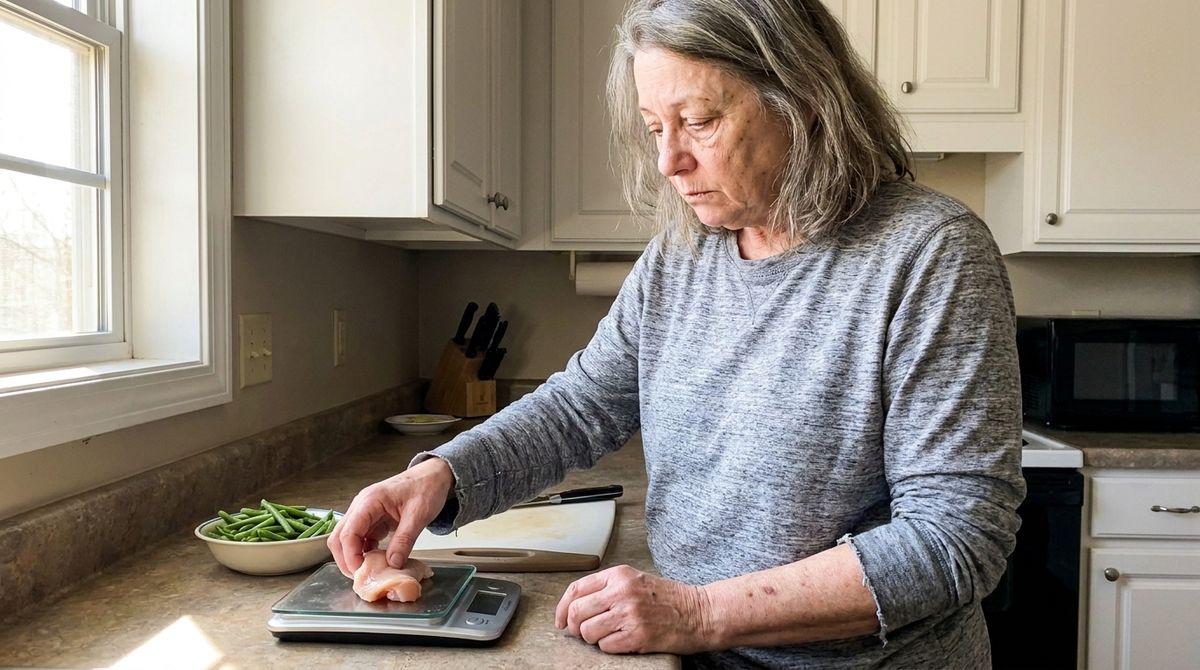
- Counting every calorie and eating clean all day. Carol weighed her chicken. She skipped the bread. By dinner she'd done everything right, and it changed nothing about nine o'clock, because the daytime had never been the problem. The signal still went quiet after dinner no matter how good the day was.
- Trying to white-knuckle it at night. She'd stand at the counter and tell herself no. But you can't talk a hormone back on. When her brain never got the 'you've had enough' message, fighting it was fighting her own body, and her body won by 9 p.m. every time.
- Berberine and 'metabolism' pills from the pharmacy. Two of those bottles under her sink. The trouble is stomach acid breaks most of it down before it ever arrives. Almost nothing reached the gut cells that release the hormone, so the swallowed version mostly never showed up where it mattered.
- Bedtime tea and 'just go to bed earlier.' It bought her ten quiet minutes. Then she was awake, the hormone was still low, and the pull was right back where it started.
Why The Signal Goes Silent By Evening
So I went looking for the real reason, not for Carol's sake at first, honestly, but because I'd told too many women the wrong thing for too long and I needed to know what I'd missed.
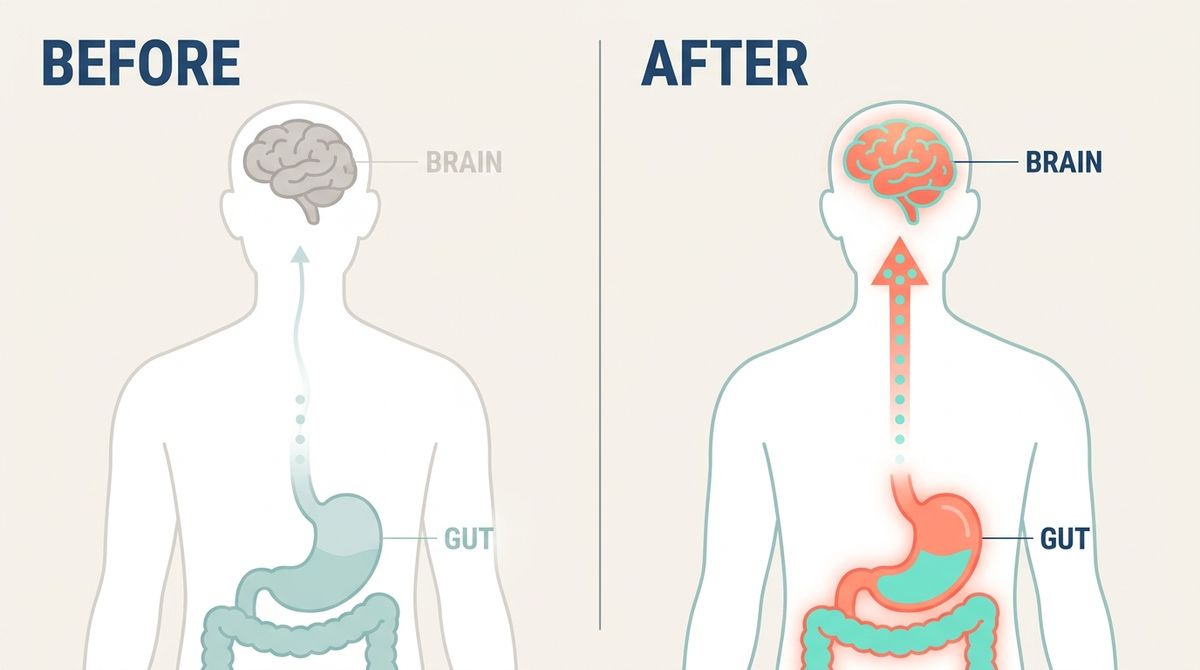
Here it is, plain as I can say it. There's a hormone your gut makes called GLP-1. Its whole job is to tell your brain you're full. When it's working, you finish dinner and you're done, the thought of food just quietly switches off.
That's not discipline. That's a chime your body sends. And after 50, that chime gets faint. By a woman's mid-50s, more than half of her GLP-1 is gone. Think of it like a doorbell with a dying battery.
In the morning there's still enough charge that the button rings loud and your brain hears it, you're satisfied, you don't think about food. But the battery drains as the day goes on.
By night it's so low that you press the button and nothing happens. No chime ever reaches the house. That's Carol at the pantry.
She wasn't pressing harder because she was weak. She was pressing and pressing and the bell simply wasn't ringing anymore. The crackers, the standing over the sink, the rinsed sensible bowl two feet away, that's a brain that finished dinner and never got told.
So the question stopped being how do I get Carol to resist at night. That was never going to work, you can't resist your way out of a signal that isn't being sent.
The question became: how do you keep that battery charged so the bell still rings at nine o'clock? And the reason nobody had told her this is almost embarrassing in how simple it is.
For decades the whole conversation about women and weight was about her choices, eat less, move more, try harder. Nobody was looking at the hormone going quiet underneath all of it, because there was nothing to do about it anyway.
So it was easier to call it a character flaw than admit it was chemistry.
The Doorbell With A Dying Battery
Here is the part no one told Carol. The whole reason she could eat a sensible dinner and still raid the pantry an hour later isn't a character flaw. It's a hormone. Your gut makes something called GLP-1.
Think of it as the messenger that tells your brain, "That's enough, you're full." When it's working, you finish a meal and the thought of food just quietly goes away.
But GLP-1 drops with age. By her mid-50s, a woman has lost more than half of it. And here's the cruel part, it doesn't drop evenly through the day. In the morning there's still enough to do its job.
By evening, the tank is nearly empty. Picture a doorbell with a dying battery. In the morning it still rings loud enough that your brain hears "you're full."
By nine at night the battery is so low the button does nothing. You press and press, you eat and eat, and no chime ever reaches the house. That's why Carol's day held together and her nights fell apart.
She wasn't pressing harder than anyone. Her bell had just gone silent. So when she stood at that pantry going back for more after a full dinner, it wasn't greed and it wasn't weakness. Her brain genuinely never got the message that she'd already eaten.
What A Real Fix Had To Do
So I stopped looking for a way to make Carol stronger at night and started asking what would actually keep that bell ringing. Three things, all at once. Anything less and the signal still fades by evening, which is exactly why everything she'd tried had missed.
The approach I built around those three is what I now call the Evening Signal Method.
- First, wake the gut cells back up. The cells that release the fullness hormone go quiet with age. Berberine, a plant compound, nudges them to start firing again, it recharges the battery so the bell has power.
- Second, keep the charge steady into the night. A spark in the morning that fades by lunch is no help at 9 p.m. Prebiotics feed the good gut bacteria that keep those cells releasing the hormone hour after hour, so the signal lasts through dinner instead of dying after it.
- Third, get both past the stomach. Swallow them and stomach acid breaks most of it down before it ever arrives. So instead of through the gut, they go through the skin, absorbed slowly and steadily over about 8 hours, reaching the gut whole instead of destroyed on the way.
What Happened When I Started Recommending It
The first woman I tried it with was a patient named Donna P., three years of midnight kitchen trips, sensible all day, ambushed every night.
She wore the patch eleven days and called my office almost annoyed. "The pull just isn't there at night anymore," she said. "I keep waiting for it." I mentioned the early results at a regional digestive-health meeting that spring. I thought colleagues would be curious.
Instead, two of them cornered me afterward. One told me, flatly, that pushing an over-the-counter patch over "the standard advice" made me look like I'd left medicine. The standard advice.
Eat less. Move more. White-knuckle the evenings.
A week later I got a stiff email from a continuing-education program I'd lectured for over the years. My talk on age-related fullness signaling was being "reviewed for tone" and quietly dropped from the fall schedule. Nobody disputed the biology.
They disputed that I'd stopped blaming the patient for it. That told me everything.
The Patch I Finally Built With A Small Team
After Donna, I stopped treating it as a side experiment. I partnered with a small US formulation team and we spent the better part of a year getting the dose and the delivery right.
What we landed on is Ledisa, a thin patch you wear on the skin that keeps the fullness signal charged through the evening instead of letting the battery die after lunch. It does only what the doorbell needs. Two things that matter, going in slow and steady through the skin:
- Berberine, a plant compound that nudges the gut cells back awake so they start releasing GLP-1, the fullness hormone, again. It's the thing that puts the charge back in the battery.
- Prebiotics, food for the good bacteria in your gut. They keep those same cells firing steadily through the evening, so the chime still reaches your brain at nine at night instead of going quiet after lunch.
What The First Few Weeks Actually Feel Like
I tell every woman the same thing, because false promises are how this category got its bad name. The first few days, most feel nothing dramatic. You stick one on in the morning, wear it about eight hours, go about your day.
Somewhere in the first week or two, the evening changes before the scale does.
The cracker sleeve, the spoon in the peanut butter, the second helping you didn't plan, the pull just gets quieter. Carol described it as the kitchen not calling her name anymore. It is not even.
Some women tell me one week felt flat and then the next one shifted. The patch isn't forcing anything; it's keeping a signal lit that your body used to send on its own.
By a month or so in, evenings stop being a fight you brace for. That's the part the women who wrote to us kept coming back to, not the number on the scale, but a night they got through without standing at the counter.
What The Numbers Looked Like After A Few Months
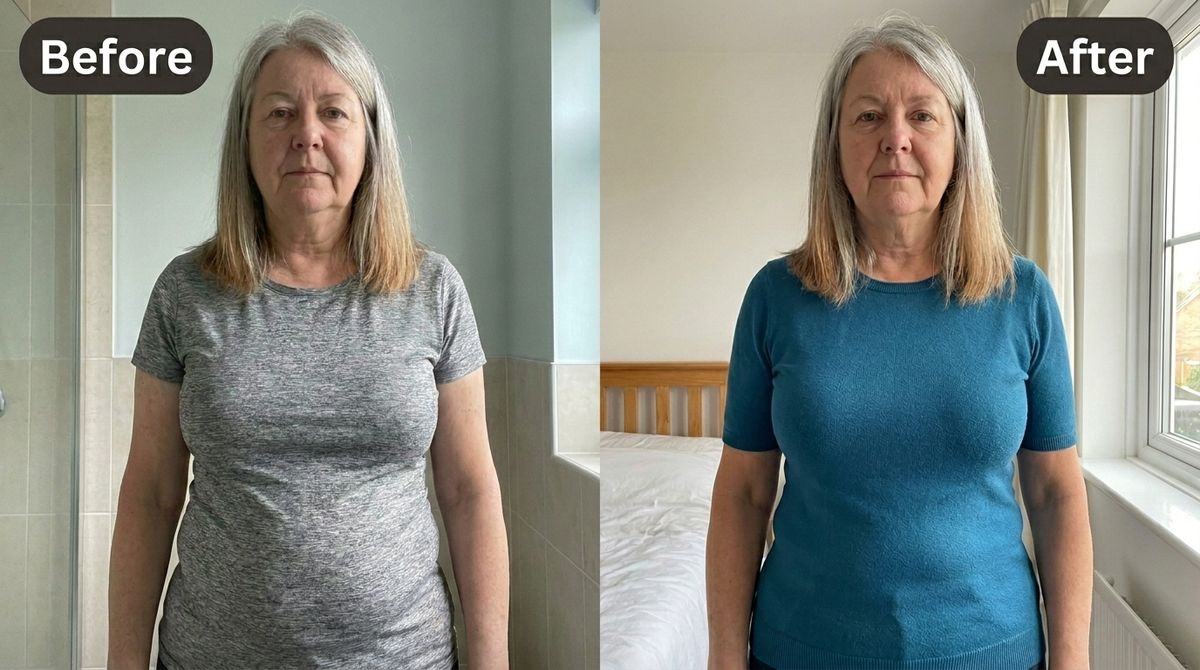
I didn't want to guess. So we started writing to the women who'd ordered, asking them one plain question: what changed after dinner?
The answers came back fast, and they were almost all about the same hour of the day. The 9 p.m. pull let go. Not the daytime. The evening. I'm not telling you it happened overnight, or that it happened to everyone.
Some women told me the first stretch was quiet and they almost gave up. Then week three or four, the kitchen stopped calling. These aren't lab figures. They're what the women themselves wrote back to us.
- around 7 in 10 of the women who wrote in said the after-dinner snacking eased within the first month
- 2 to 4 weeks was how long most said it took before the evening pull noticeably quieted
- under $1 a day, less than the saltines and cookies she used to finish standing up
What Carol Was Bracing Herself To Spend
Carol had a number in her head before any of this. She'd watched a friend go the prescription route. So we sat at her kitchen table and added it up honestly. The GLP-1 injections her doctor floated run $1,000 a month or more without insurance.
A needle every week. The nausea. And the part nobody mentions until you're already on it, most women regain the weight within a couple months of stopping.
A standing-order berberine and metabolism shelf at the pharmacy is cheaper, but she'd already proven that to herself, bottle after bottle, breaking down in her stomach before any of it reached the cells that matter. A specialist consult to keep being told it's her age?
Another co-pay for another shrug. When something keeps your fullness signal switched on into the evening, the one thing every other option missed, it should reasonably cost what a month of the needle runs. Carol expected to pay like it.
GLP-1 Injections
- $1,000+ a month, no insurance
- Weekly needle, nausea, rebound weight
Total: $12,000+ a year
Pharmacy Berberine Pills
- Broken down by stomach acid
- Mostly never reaches the gut cells
Total: Money for nothing
Specialist Visits
- Co-pay after co-pay
- "It's just your age"
Total: Another shrug
Ledisa, worn through the skin
- Reaches the gut over ~8 hours
- Keeps the signal on into the evening
Total: Under $1 a day
What It Actually Costs
And they cover the shipping. Less than the cup of coffee Carol used to leave going cold while she stood at that pantry.

The Risk Is Mine, Not Yours
I told Carol the same thing I'll tell you, because I'd want a doctor to say it plainly. You have done enough white-knuckling. You should not have to gamble on one more thing that might be another dead end.
So every pack comes with a full 90-day money-back guarantee. Wear it daily. Give your gut the eight weeks it needs to start firing in the evening again.
If the nine o'clock pull is still running your nights, if the pantry still wins, you write to us and you get every penny back. No form to argue your way through. No "did you really use it."
The lisinopril and the berberine bottles Carol bought over the years didn't come with that. Nothing she'd tried did. The company can offer it because of what keeps happening once the signal comes back on.
You risk a few weeks of patience. That's the whole of it.
Keep Telling Yourself It's Just Who You Are Now
Tomorrow night the pantry door opens again at nine. The signal stays silent. And you go on believing the fault is yours, when it never was, your gut simply stopped sending the message after dinner, and nobody ever told you it could be switched back on.
Give Your Body Back The Signal It Lost
One patch a day. Within a couple weeks the evenings start to go quiet. You eat dinner, you feel done, and the kitchen stays dark after ten. Carol fills that blue cookie jar now, and trusts herself to leave it half full.
How To Start Tonight
- Tap the button below to claim the $29 price while this batch lasts.
- Enter your shipping details, no prescription, no doctor's visit, nothing to qualify for.
- It arrives at your door in a few days.
- Each morning, peel one patch and stick it on your stomach or arm. Wear it about 8 hours and go about your day. Then watch what happens at nine o'clock.
Every Evening You Wait Is One You Don't Get Back
Here's the part I need you to sit with for a second. The hormone we're talking about doesn't pause while you think it over. It keeps falling. Every night the signal stays silent is another night your brain learns that 9 p.m. means eat.
The pull gets more automatic, not less. The habit grooves itself deeper. And the cells in your gut that make the hormone, the ones berberine is meant to wake back up, get quieter the longer they sit idle.
Wake them at 61 and they answer. Wait until they've been silent for years and they're slower to come back. That's just how it works.
So no. Waiting doesn't keep things the same. Waiting moves you the wrong way, a little, every single night. Carol stood at that pantry for years telling herself it was just who she'd become.
She waited long enough. Don't wait the way she did. Tonight can be the first night the bell rings again.
Take care of yourself,
Dr. Renata Holloway, MD
P.S. Carol keeps the blue cookie jar on her counter now, full of actual cookies, for the grandkids. She told me last week she walks past it most nights and doesn't think about it. That jar sat empty for years because she didn't trust herself. She does now.
P.P.S. Around 7 in 10 of the women who wrote to us said the same thing first: the evening pull went quiet before the scale moved. Quiet first. That's the part that surprises everyone.
P.P.P.S. At under a dollar a day, with 90 days to send it back if the evenings don't change, the only thing this costs you is another night at the pantry. You've had enough of those.